DePIN vs Oracles: How Idle Hardware Becomes Web3 Infra
Discover how DePIN turns idle GPUs and Wi‑Fi into decentralized infrastructure, powering AI, storage, and compute while out-earning traditional crypto oracles.

Discover how DePIN turns idle GPUs and Wi‑Fi into decentralized infrastructure, powering AI, storage, and compute while out-earning traditional crypto oracles.

Decentralized Physical Infrastructure Networks, or DePIN, are turning everyday hardware into productive digital assets. Instead of leaving a GPU, router, hotspot, or storage device idle, owners can connect it to a network that pays them for delivering real-world services. This changes the role of hardware from a sunk cost into a potential income-generating tool for compute, connectivity, and data services. For individuals, it means participating in internet infrastructure without needing to own a data center. For the broader web, it points toward a more distributed, community-powered foundation for the next generation of digital services.
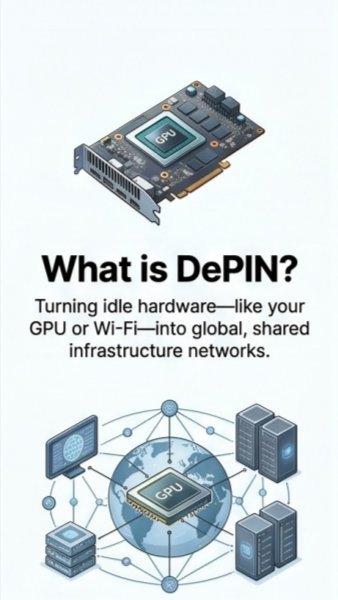
Most consumer and business hardware runs far below its full capacity, whether it is a gaming GPU sitting idle overnight or a Wi-Fi hotspot with unused bandwidth. DePIN changes that by pooling distributed resources into networks that can serve real customers across AI, wireless coverage, mapping, and storage. Unlike traditional infrastructure, which often requires massive capital investment, decentralized physical infrastructure can grow through many smaller contributors. This creates a more open infrastructure layer where regular users, small businesses, and local operators can help power digital services. As demand for compute and connectivity rises, DePIN is becoming more than a crypto niche; it is emerging as a practical infrastructure market.
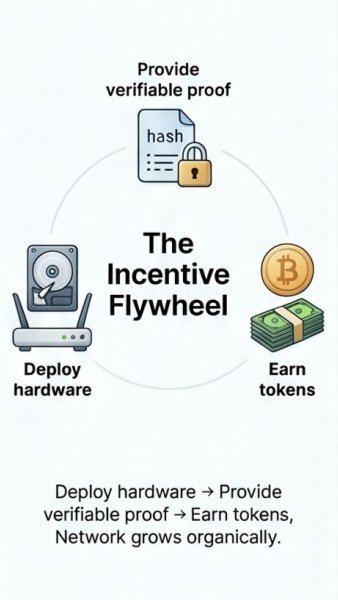
DePIN networks work by combining physical hardware, blockchain verification, and token-based rewards. A participant provides a service, such as GPU compute, wireless coverage, or file storage, while the network verifies that the service was actually delivered. These verification systems, often called proofs, help prevent fake activity and keep incentives aligned with useful work. Smart contracts can then automate payments, making the process more transparent than many traditional infrastructure marketplaces. If the sector reaches the projected multi-billion-dollar scale by 2026, the strongest networks will likely be those that prove real utility rather than simply distribute tokens.
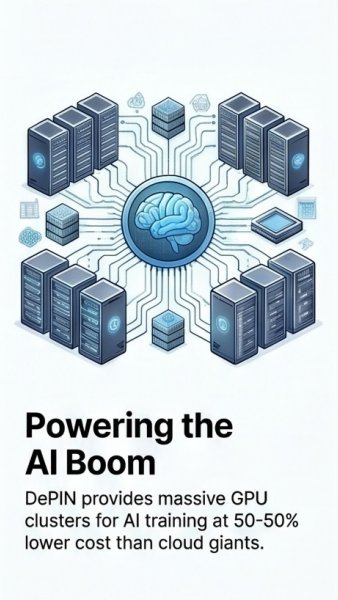
The strongest DePIN use cases are already forming around areas where centralized infrastructure is expensive, limited, or slow to scale. GPU networks can support AI model training and inference, while decentralized storage networks can give developers alternatives to traditional cloud providers. Mapping networks can collect fresh location data from distributed contributors, and wireless networks can expand coverage in underserved areas. Enterprises may also use DePIN-powered compute to access flexible capacity without relying entirely on hyperscale cloud platforms. These examples show how decentralized infrastructure can move from theory into practical services that customers are willing to pay for.
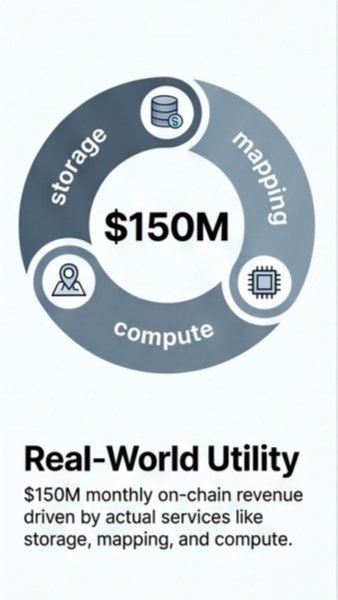
DePIN reframes a simple question: can the hardware people already own help build a more open internet? The answer is increasingly yes, especially as GPUs, hotspots, storage devices, and sensors begin supporting paid services across AI, connectivity, mapping, and enterprise compute. Reported customer revenue, including roughly
50M in monthly service payments across the sector, suggests the market is moving beyond speculation toward real usage. For hardware owners, the opportunity is to evaluate whether their devices can join networks with credible demand and transparent economics. For businesses, DePIN offers a glimpse of infrastructure that is more distributed, flexible, and potentially more cost-efficient than legacy models.
Follow the hub for smart contract, DeFi, blockchain infrastructure and Web3 security resources.
Related Service Blockchain Trust & Web3 SecuritySecure smart contracts, token workflows, integrations and decentralized infrastructure before launch.
Implementation Use Case Secure AI DeFi Risk AgentExplore how monitored agents can support DeFi risk review, anomaly triage and governance operations.
Recommended Course Verifiable Trust After AI & QuantumLearn how blockchain, credentials and cryptographic trust models support resilient digital systems.
YouTube Playlist AI Agents + Blockchain CourseWatch the course on secure Web3 agents, wallets, DeFi workflows and smart contract integrations.
Book a Discovery Call Map This to Your RoadmapDiscuss how this topic applies to your product, compliance posture, architecture or delivery plan.
Editorial trust
Each KryptoMindz article is reviewed against current enterprise AI, blockchain, digital identity and compliance practices before publication or major updates.
Founder-led perspective from KryptoMindz Technologies, focused on secure AI adoption, Web3 risk, digital identity and enterprise trust architecture.
LinkedIn profileResearch, engineering and advisory work across AI Agents, Enterprise Blockchain, Digital Identity and Digital Trust Engineering.
YouTube channelDiscover more insights and resources on our platform.
Visit Kryptomindz