Inside the $16T CLARITY Act On‑Chain Asset Boom
Discover how the 2025 CLARITY Act unlocks a $16T real‑world asset tokenization wave, reshaping DeFi, banks, and global capital markets on compliant blockchain r
Discover how the 2025 CLARITY Act unlocks a $16T real‑world asset tokenization wave, reshaping DeFi, banks, and global capital markets on compliant blockchain r
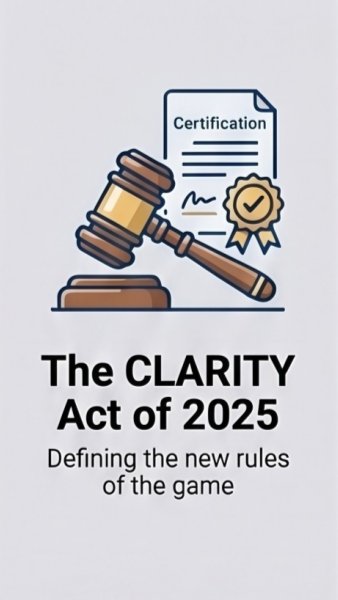
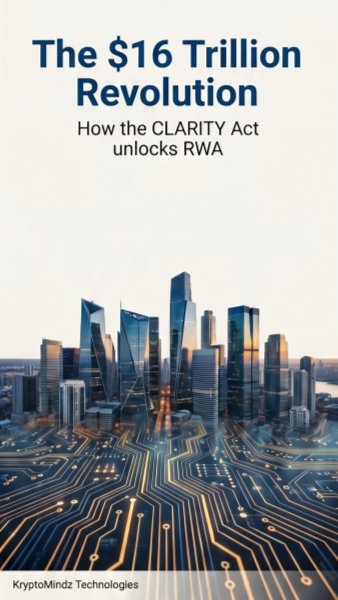
For years, tokenized real-world assets sat in a regulatory gray area, with innovators moving faster than the rulebook. The CLARITY Act could change that by giving banks, asset managers, fintech platforms, and DeFi builders a clearer path to bring assets like real estate, private credit, treasuries, and invoices on-chain. Instead of relying on fragmented legal interpretations, institutions can design products around defined compliance standards. That matters because the estimated
6 trillion tokenization opportunity depends less on hype and more on trust, supervision, and usable market infrastructure. The shift is not just about crypto adoption; it is about upgrading how financial assets are issued, transferred, financed, and accessed globally.
The CLARITY Act of 2025 is important because it aims to define how digital assets are categorized, regulated, and traded across U.S. markets. For financial institutions, that means fewer unanswered questions about whether a tokenized asset falls under securities law, commodities oversight, or another framework. In practical terms, clearer digital asset regulation can make it easier to build compliant exchanges, custody services, lending platforms, and settlement systems. This creates the foundation for digital rails where assets move faster, with better transparency and lower operational friction. Instead of treating blockchain as a side experiment, the law could help integrate on-chain finance into the core infrastructure of global capital markets.
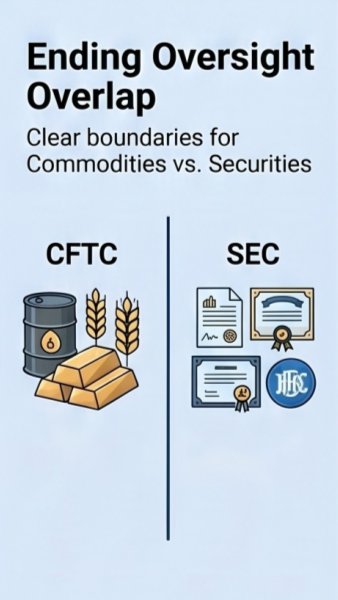
One of the biggest barriers to real-world asset tokenization has been confusion over whether certain digital assets should be treated as commodities or securities. When multiple regulators appear to have overlapping authority, banks and funds often pause instead of launching new products. By drawing a clearer line between commodities and securities, the CLARITY Act can help market participants understand which rules apply before capital is committed. This matters for compliant DeFi because lending pools, collateral markets, and tokenized investment products need predictable oversight to attract serious liquidity. Once institutions know the regulatory lane they are operating in, trillions in traditional assets become easier to bring into programmable financial systems.
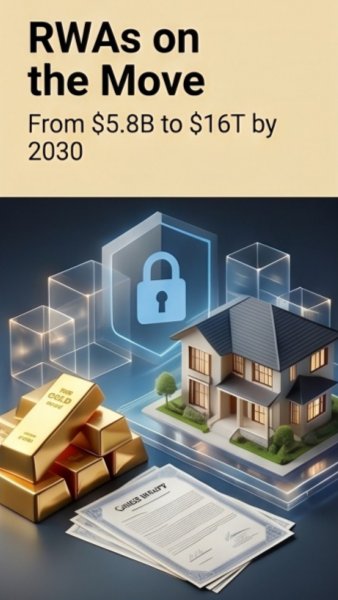
Tokenized real-world assets work by turning ownership rights, payment claims, or collateral interests into digital tokens recorded on a blockchain. A commercial property, a pool of invoices, or a private credit agreement can be represented as a tokenized contract with rules for transfer, yield, repayment, and compliance. Under a clear rulebook, issuers can verify investors, automate reporting, and make assets easier to trade or use as collateral. For example, a tokenized invoice could be financed more quickly, while tokenized real estate shares could broaden access to income-producing property. The real benefit is not simply putting assets on-chain; it is making them more transparent, programmable, and usable across regulated financial platforms.
The first wave of tokenized finance is likely to appear where institutions already manage large volumes of assets and transactions. Banks may use compliant DeFi rails to automate settlement, improve collateral management, and reduce back-office costs. Asset managers could offer tokenized treasuries, private credit funds, or money market products that settle faster and provide more transparent reporting. For businesses, tokenized invoices and receivables may unlock quicker financing, while consumers may eventually see mortgages or savings products supported by blockchain infrastructure without realizing it. The user experience may feel familiar, but behind the scenes, global financial products could become faster, more liquid, and more efficient.
The CLARITY era of on-chain finance rewards people who understand how regulation, infrastructure, and market demand fit together. Speculation may create short-term attention, but durable opportunities will come from identifying which real-world assets can move on-chain legally and efficiently. Investors, founders, and financial professionals should watch areas like tokenized treasuries, private credit, compliant DeFi, and institutional custody. The key is to evaluate projects based on regulatory alignment, asset quality, liquidity, and real utility rather than headlines alone. If a
6 trillion shift unfolds, the best-positioned participants will be those who understand the rails before the market becomes crowded.
Follow the hub for MiCA, stablecoins, RWA regulation, CASP controls and related training resources.
Related Service RWA & Crypto Compliance StrategyPlan regulated token, stablecoin and RWA programs with governance, risk controls and security reviews.
Implementation Use Case Web3 RWA Compliance OperationsSee how teams can coordinate token workflows, compliance evidence and exceptions across regulated asset operations.
Recommended Course Real-World Assets & TokenizationBuild practical fluency in tokenized assets, settlement models, custody, risk and regulatory operating models.
YouTube Playlist Stablecoin & RWA Regulation BriefingWatch the playlist on CLARITY, GENIUS, STABLE Acts, MiCA comparisons and RWA strategy.
Book a Discovery Call Map This to Your RoadmapDiscuss how this topic applies to your product, compliance posture, architecture or delivery plan.
Editorial trust
Each KryptoMindz article is reviewed against current enterprise AI, blockchain, digital identity and compliance practices before publication or major updates.
Founder-led perspective from KryptoMindz Technologies, focused on secure AI adoption, Web3 risk, digital identity and enterprise trust architecture.
LinkedIn profileResearch, engineering and advisory work across AI Agents, Enterprise Blockchain, Digital Identity and Digital Trust Engineering.
YouTube channelDiscover more insights and resources on our platform.
Visit Kryptomindz