MiCA, EUDI & EBSI: Making Crypto Transfers Trustworthy
Discover how MiCA, EUDI wallets and EBSI ledgers can turn anonymous crypto transfers into compliant, traceable and legally trusted transactions across the EU.
Discover how MiCA, EUDI wallets and EBSI ledgers can turn anonymous crypto transfers into compliant, traceable and legally trusted transactions across the EU.
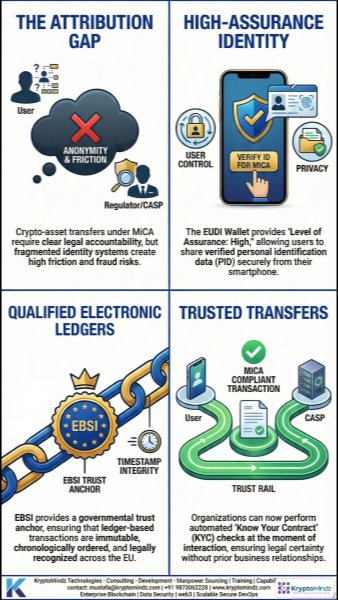
For crypto to reach mainstream adoption, it needs to feel as dependable as online banking without losing the speed and openness that make digital assets valuable. MiCA identity requirements are a major step toward that goal because they bring clear rules for who is involved in crypto transactions and how accountability is proven. For crypto asset service providers, this means moving from opaque, fragmented processes to regulated rails that support safer onboarding, compliant transfers, and stronger customer trust. In practice, a user could send digital assets across the EU with the same confidence they expect from a bank transfer, knowing identity checks and compliance controls are built into the experience. The result is a more mature crypto market where innovation can scale without leaving regulators, businesses, or users exposed.
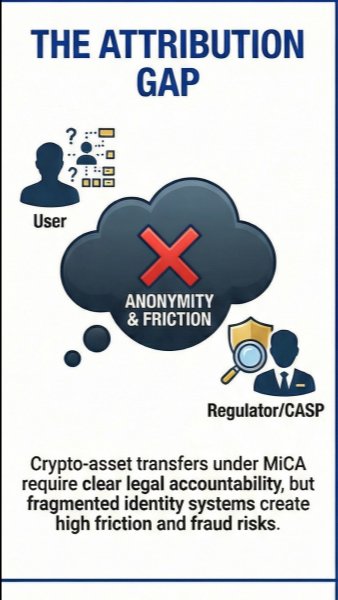
Today’s crypto identity landscape is often disconnected, with exchanges, wallets, custodians, and decentralized applications relying on separate verification methods. This creates an attribution gap: a transaction may be visible on-chain, but the responsible party behind it is not always reliably identifiable. Under MiCA, that gap becomes a serious compliance challenge because crypto asset service providers must demonstrate accountability, reduce fraud exposure, and support regulatory reporting. For example, if suspicious funds move between multiple wallets and platforms, fragmented identity data can delay investigations and increase operational risk. A stronger identity framework helps connect blockchain activity to verified participants while preserving the efficiency that users expect from digital asset transfers.
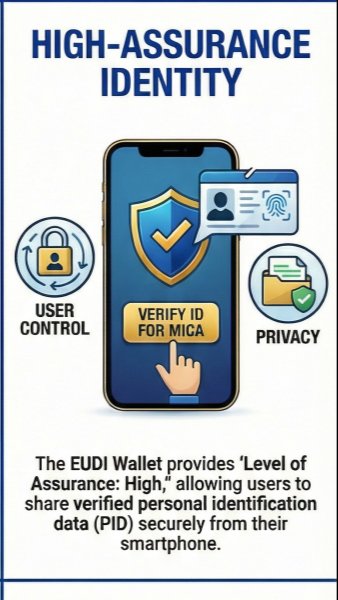
The EUDI Wallet can give individuals and businesses a secure way to prove who they are using verified digital credentials stored on their phone. Instead of repeatedly uploading passports, utility bills, or corporate documents to every crypto platform, users could share only the specific data needed for a compliant transaction. This supports MiCA compliance while improving privacy, because personal information is exchanged in a controlled and purpose-based way. For crypto asset service providers, EUDI Wallet integration can streamline onboarding, reduce manual verification, and create a more consistent customer experience across EU markets. In practical terms, a user could verify their identity once through a trusted digital identity framework and then reuse those credentials for compliant crypto transfers, wallet interactions, or regulated service access.
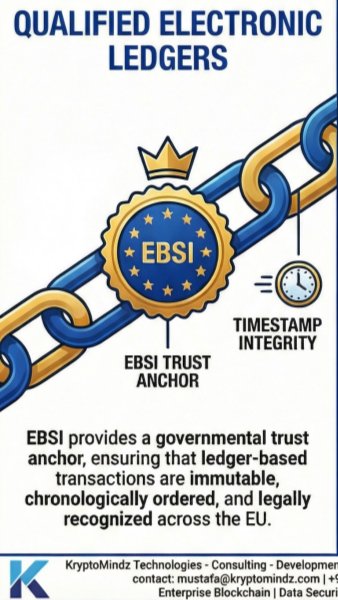
EBSI and qualified electronic ledgers can help bridge the gap between blockchain records and legally recognized evidence in the European Union. By anchoring transactions to trusted public infrastructure, organizations can create records that are tamper-resistant, timestamped, and easier to audit. This matters for MiCA compliance because regulators, courts, and counterparties need more than technical proof; they need reliable evidence that can stand up in a legal and supervisory context. For example, a crypto asset service provider could use trusted ledger records to demonstrate when a transaction occurred, which compliance checks were performed, and how the data integrity was preserved. This turns blockchain from a simple transaction layer into a stronger foundation for regulated digital asset operations.
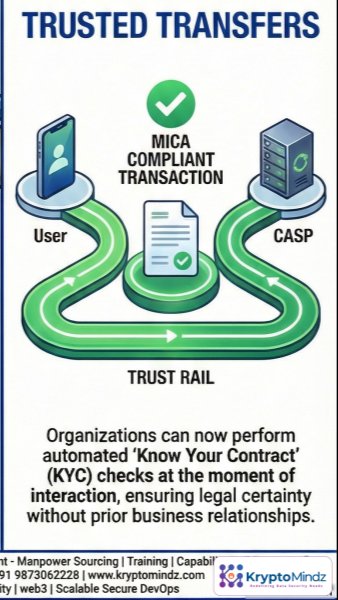
When verified identity, trusted ledgers, and automated compliance checks work together, MiCA-compliant crypto transfers can become faster and more reliable. Instead of relying on slow manual reviews or pre-existing relationships, organizations can verify the user, assess the transaction, and document the outcome at the moment of interaction. This is where “Know Your Contract” becomes powerful: smart contracts and counterparties can be checked in real time before value moves. For example, a regulated platform could approve a cross-border digital asset transfer instantly if the sender’s credentials, recipient requirements, and ledger evidence all meet policy rules. The result is a more scalable compliance model that supports instant crypto payments, institutional workflows, and safer decentralized finance interactions.
Follow the hub for MiCA, stablecoins, RWA regulation, CASP controls and related training resources.
Related Service RWA & Crypto Compliance StrategyPlan regulated token, stablecoin and RWA programs with governance, risk controls and security reviews.
Implementation Use Case Web3 RWA Compliance OperationsSee how teams can coordinate token workflows, compliance evidence and exceptions across regulated asset operations.
Recommended Course Real-World Assets & TokenizationBuild practical fluency in tokenized assets, settlement models, custody, risk and regulatory operating models.
YouTube Playlist Stablecoin & RWA Regulation BriefingWatch the playlist on CLARITY, GENIUS, STABLE Acts, MiCA comparisons and RWA strategy.
Book a Discovery Call Map This to Your RoadmapDiscuss how this topic applies to your product, compliance posture, architecture or delivery plan.
Editorial trust
Each KryptoMindz article is reviewed against current enterprise AI, blockchain, digital identity and compliance practices before publication or major updates.
Founder-led perspective from KryptoMindz Technologies, focused on secure AI adoption, Web3 risk, digital identity and enterprise trust architecture.
LinkedIn profileResearch, engineering and advisory work across AI Agents, Enterprise Blockchain, Digital Identity and Digital Trust Engineering.
YouTube channelDiscover more insights and resources on our platform.
Visit Kryptomindz