Secure by Design in 40 Seconds
What if security was baked in, not patched?

What if security was baked in, not patched?
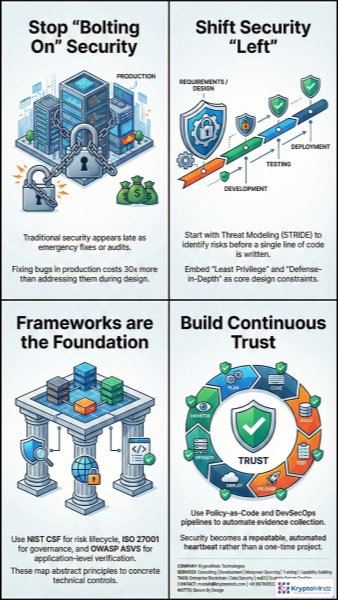
What if security was not an afterthought, but part of every product decision from the start? Modern software teams move fast, but speed without secure design can turn small flaws into major business risks. When security is baked into requirements, architecture, code, and delivery pipelines, teams build products that are safer, easier to maintain, and more trusted by users. This approach helps organizations reduce vulnerabilities, avoid costly rework, and create digital experiences that customers can rely on.
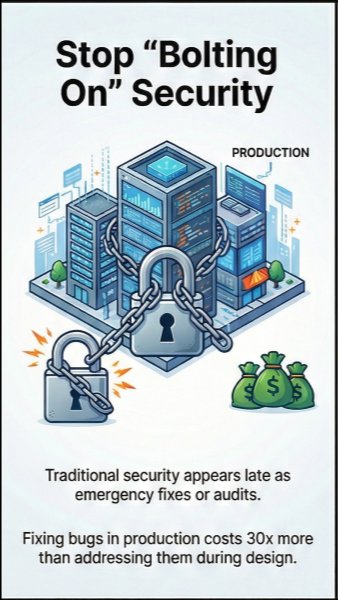
Bolting on security after launch often means teams discover critical weaknesses when customers, payments, and sensitive data are already exposed. A missing access control, insecure API endpoint, or weak authentication flow can quickly become an emergency that disrupts engineering roadmaps and damages brand credibility. Fixing security bugs in production is also more expensive because teams must patch live systems, manage incident response, and sometimes notify customers or regulators. Instead of wrapping controls around the product at the end, organizations need secure software development practices that reduce risk before release.
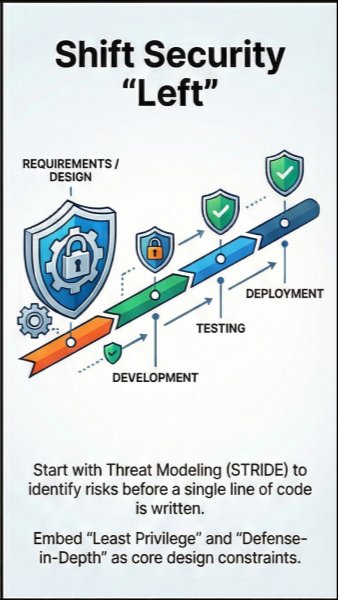
Shifting security left means bringing security conversations into planning, design, coding, and testing instead of waiting for a final audit. For example, a team building a customer portal can threat model login flows, define least-privilege access, and test authorization rules before the first release. This approach helps developers catch insecure patterns while they are still easy to change, such as overly broad permissions or missing input validation. By embedding threat modeling, secure code reviews, and automated security testing into the software development lifecycle, teams prevent small issues from becoming expensive production failures.
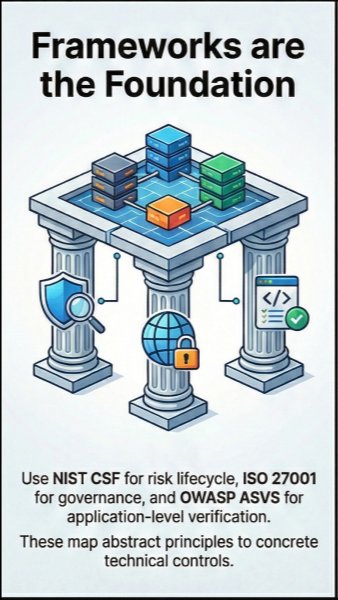
Security frameworks give teams a practical foundation for turning good intentions into repeatable action. Standards such as NIST Cybersecurity Framework, ISO 27001, and OWASP ASVS help organizations define what secure design, implementation, and verification should look like. For a development team, that might mean mapping authentication controls to OWASP ASVS, aligning risk management with NIST CSF, or using ISO 27001 to support governance and audit readiness. These frameworks create a shared language across engineering, security, compliance, and leadership, making it easier to build secure systems consistently at scale.
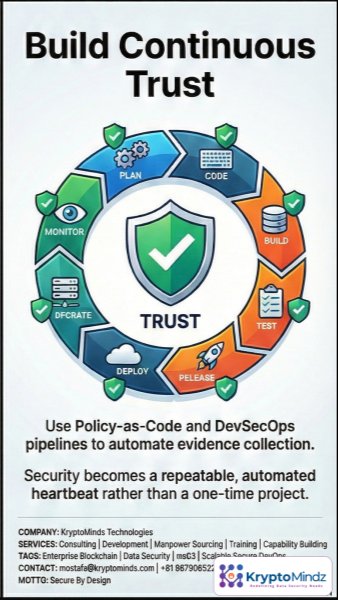
Continuous trust is built when security evidence is collected automatically throughout the delivery lifecycle. Policy-as-code, DevSecOps pipelines, software composition analysis, infrastructure scanning, and automated compliance checks help teams verify security at every stage. For example, a pipeline can block deployment if a critical dependency vulnerability is detected or if cloud infrastructure violates approved configuration policies. This creates an auditable security heartbeat across planning, coding, building, testing, deployment, and monitoring, giving teams confidence that trust is maintained long after release.
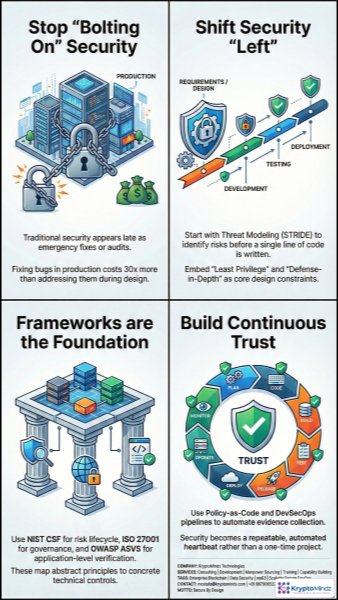
The goal is not simply to ship more features; it is to ship systems people can trust. Every login screen, payment workflow, API, and data store represents a promise to protect users and the business. When secure design, strong frameworks, DevSecOps automation, and continuous monitoring work together, security becomes part of the product experience rather than a hidden back-office task. Trusted systems move faster because teams spend less time reacting to incidents and more time improving what customers value.
Follow the hub for governed agents, secure tool use, oversight models and AI security resources.
Related Service Secure AI GovernanceDesign AI systems with controls for access, tool use, auditability, escalation and human oversight.
Implementation Use Case Secure AI Compliance Monitoring AgentSee how governed agents can monitor policies, evidence and exceptions without losing accountability.
Recommended Course Secure by Design MandatesTurn secure-by-design principles into practical product, software and operational security controls.
YouTube Playlist Enterprise AI Security ArchitectureWatch the course on secure LLMs, RAG, agents, access controls and AI governance architecture.
Book a Discovery Call Map This to Your RoadmapDiscuss how this topic applies to your product, compliance posture, architecture or delivery plan.
Editorial trust
Each KryptoMindz article is reviewed against current enterprise AI, blockchain, digital identity and compliance practices before publication or major updates.
Founder-led perspective from KryptoMindz Technologies, focused on secure AI adoption, Web3 risk, digital identity and enterprise trust architecture.
LinkedIn profileResearch, engineering and advisory work across AI Agents, Enterprise Blockchain, Digital Identity and Digital Trust Engineering.
YouTube channelDiscover more insights and resources on our platform.
Visit Kryptomindz