Real-World Assets (RWAs) Explainer
This video breaks down real‑world assets, or RWAs, and how they move from traditional finance into blockchain-based markets. You’ll learn what RWAs are, how tok
This video breaks down real‑world assets, or RWAs, and how they move from traditional finance into blockchain-based markets. You’ll learn what RWAs are, how tok
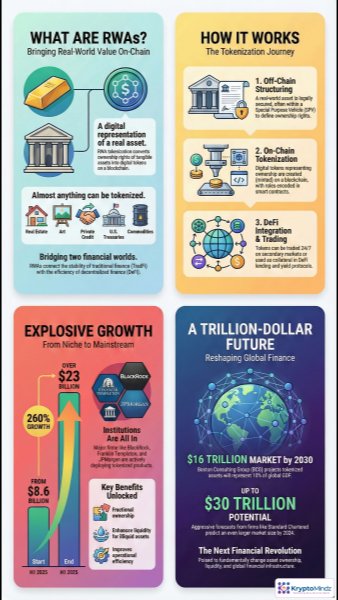
Real-world assets on-chain are changing how traditional investments connect with blockchain-based markets. This section introduces RWAs, or real-world assets, and explains how assets like real estate, bonds, credit, and commodities can be represented digitally through tokenization. Instead of treating blockchain as a separate financial universe, RWAs show how crypto infrastructure can support familiar assets with faster transfers, broader access, and more programmable ownership. For investors, builders, and institutions, understanding this shift is key to seeing why tokenized assets are becoming one of the most important trends in digital finance.
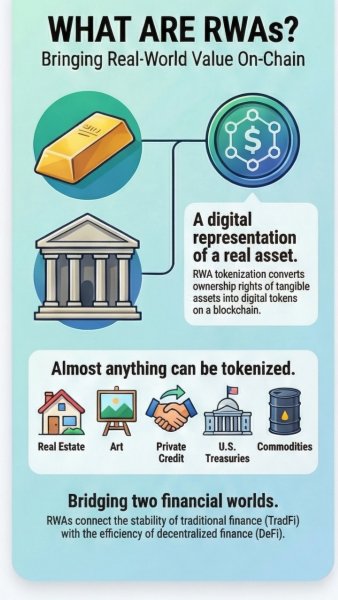
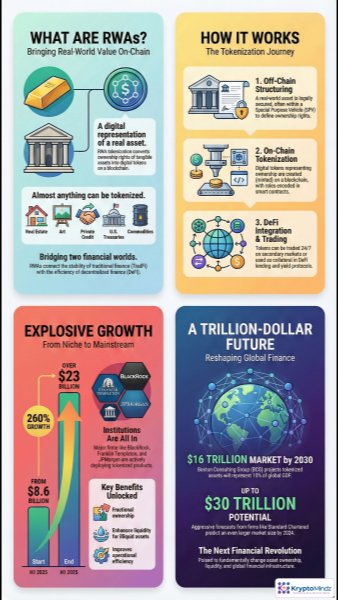
Real-world assets are physical or traditional financial assets whose ownership or economic rights are recorded on a blockchain. Common examples include commercial real estate, private credit, U.S. Treasury bonds, invoices, commodities, and investment funds. Through asset tokenization, a blockchain token can represent a claim, share, or right tied to an underlying asset, making it easier to divide, transfer, and manage. This does not mean the asset itself disappears into crypto; instead, the blockchain acts as a digital record layer that can make ownership more transparent and efficient. In practice, RWAs help bring tangible value into decentralized finance while keeping a connection to regulated, real-world markets.
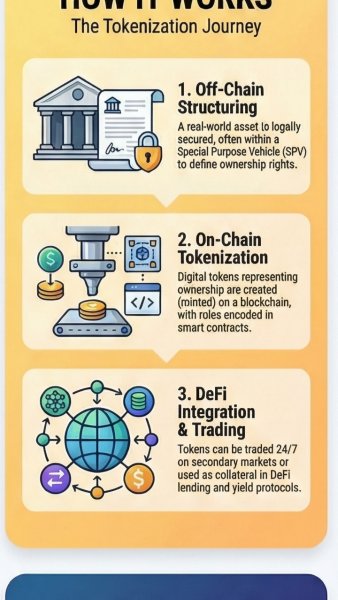
The tokenization journey usually starts outside the blockchain with legal structuring, because investors need clear rights to the underlying asset. A company, fund, or special-purpose vehicle may be created to hold the asset and define how income, ownership, redemption, or voting rights work. Once that framework is in place, tokens are issued on-chain using smart contracts that can automate transfers, compliance rules, and ownership records. After issuance, these tokenized real-world assets may be traded on approved platforms, used as collateral, or integrated into decentralized finance strategies. This process shows that successful RWA tokenization depends on both strong legal design and reliable blockchain infrastructure.
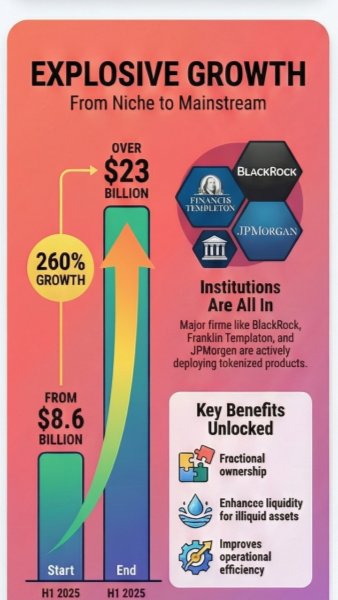
RWA tokenization is moving from a niche crypto concept into a mainstream financial trend. Market activity has already reached the tens of billions of dollars, with rapid growth driven by institutions, fintech platforms, and demand for more efficient asset markets. Major financial firms are exploring tokenized funds, on-chain credit products, and blockchain-based settlement for assets that traditionally move slowly through legacy systems. The practical benefits are significant: investors may access smaller fractions of high-value assets, issuers can reach broader markets, and operations like settlement and reporting can become faster and less manual. As adoption grows, tokenized real-world assets could become a standard part of modern portfolio construction.
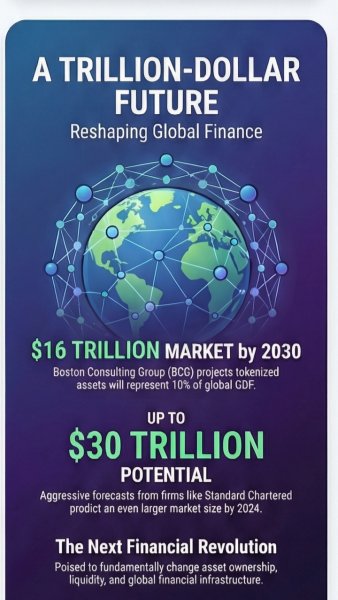
The long-term opportunity for tokenized real-world assets could be enormous, with analysts projecting a multi-trillion-dollar market over the next decade. Conservative forecasts expect a meaningful portion of traditional financial assets to move on-chain, while more aggressive estimates suggest tens of trillions of dollars could eventually be tokenized. This growth may come from areas such as tokenized Treasury products, private credit, real estate, money market funds, and institutional-grade collateral. If adoption continues, tokenization could reshape how ownership is recorded, how assets are financed, and how liquidity moves across global markets. The biggest impact may not be that every asset becomes crypto-native, but that financial infrastructure becomes faster, more transparent, and more interoperable.
Real-world asset tokenization points to a future where traditional finance and blockchain technology work more closely together. Regulated assets can benefit from blockchain’s efficiency, while crypto markets can gain exposure to assets with real-world cash flows and established legal frameworks. For investors, this means new ways to access diversified products, use tokenized collateral, and participate in markets that were once limited by geography, minimum investment sizes, or slow settlement cycles. For institutions, RWAs offer a path to more automated operations, improved transparency, and potentially deeper liquidity. Understanding how tokenized assets are structured, traded, and regulated will be essential for navigating the next phase of financial innovation.
Follow the hub for MiCA, stablecoins, RWA regulation, CASP controls and related training resources.
Related Service RWA & Crypto Compliance StrategyPlan regulated token, stablecoin and RWA programs with governance, risk controls and security reviews.
Implementation Use Case Web3 RWA Compliance OperationsSee how teams can coordinate token workflows, compliance evidence and exceptions across regulated asset operations.
Recommended Course Real-World Assets & TokenizationBuild practical fluency in tokenized assets, settlement models, custody, risk and regulatory operating models.
YouTube Playlist Stablecoin & RWA Regulation BriefingWatch the playlist on CLARITY, GENIUS, STABLE Acts, MiCA comparisons and RWA strategy.
Book a Discovery Call Map This to Your RoadmapDiscuss how this topic applies to your product, compliance posture, architecture or delivery plan.
Editorial trust
Each KryptoMindz article is reviewed against current enterprise AI, blockchain, digital identity and compliance practices before publication or major updates.
Founder-led perspective from KryptoMindz Technologies, focused on secure AI adoption, Web3 risk, digital identity and enterprise trust architecture.
LinkedIn profileResearch, engineering and advisory work across AI Agents, Enterprise Blockchain, Digital Identity and Digital Trust Engineering.
YouTube channelRelated Service
Digital Assets & RWA Consulting
RWA tokenization needs more than a token contract. We design the compliance, custody and governance architecture behind it.
Book a free consultation →Discover more insights and resources on our platform.
Visit Kryptomindz