RWA Tokenization Explainer
In this video, we’ll explore how real‑world asset tokenization connects traditional assets with blockchain technology, what kinds of assets are being tokenized,
In this video, we’ll explore how real‑world asset tokenization connects traditional assets with blockchain technology, what kinds of assets are being tokenized,
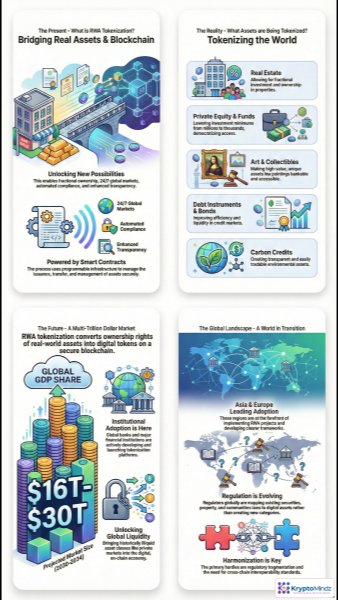
Real-world asset tokenization, often called RWA tokenization, is bringing familiar assets like real estate, bonds, funds, and commodities onto blockchain-based infrastructure. Instead of replacing traditional finance, it creates a digital bridge that can make ownership easier to verify, transfer, and manage. For example, a commercial building or private credit product could be represented by digital tokens, allowing qualified investors to access opportunities that were once difficult to reach. This section sets the stage for how tokenized real-world assets work, why institutions are paying attention, and what needs to happen before the market reaches mainstream adoption. Regulation, asset standards, and investor protections will play a major role in determining how quickly this bridge between real assets and blockchain can scale.
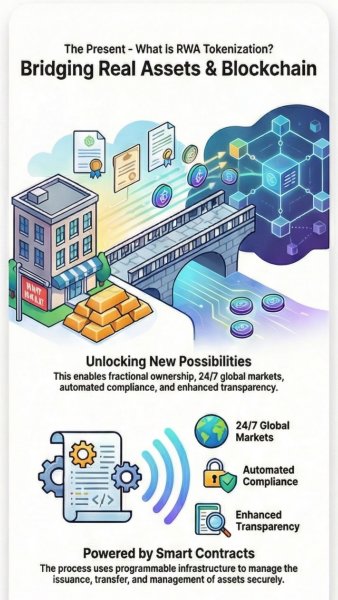
RWA tokenization works by converting legal ownership rights or economic interests in an asset into digital tokens recorded on a blockchain. These tokens can represent anything from a share of a property to an interest in a bond, fund, or invoice-backed financing product. Smart contracts help automate key processes such as issuance, investor verification, transfer restrictions, dividend distribution, and compliance checks. In practical terms, this can reduce paperwork, speed up settlement, and make asset ownership easier to track in near real time. The underlying asset still needs proper custody, valuation, and legal documentation, which is why strong governance is just as important as the technology itself.
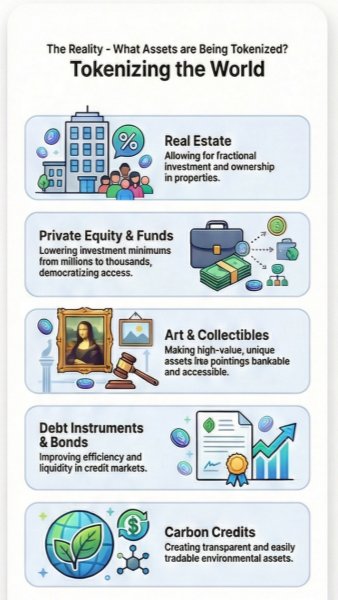
Tokenized real-world assets are expanding across sectors where ownership has traditionally been costly, slow, or difficult to divide. Real estate tokenization can allow investors to participate in income-producing properties with smaller capital commitments, while tokenized funds may lower barriers to private market exposure. Art, luxury goods, and collectibles can become more liquid when ownership or revenue rights are digitally represented and verified. Debt instruments, treasury products, and bonds are also strong candidates because tokenization can improve settlement speed and secondary market access. Even carbon credits and renewable energy certificates can benefit from blockchain transparency, helping reduce double counting and improve trust in environmental markets.
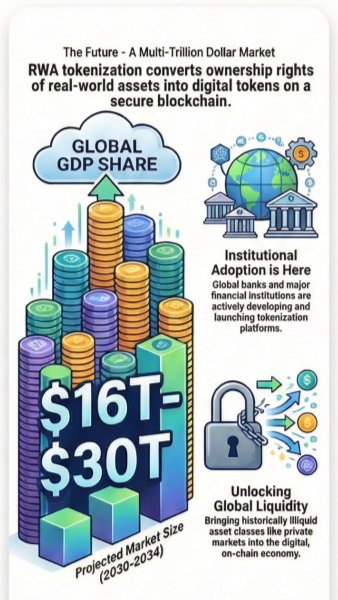
The RWA tokenization market is attracting attention because it targets some of the largest pools of value in the global economy. Real estate, private credit, government bonds, commodities, and investment funds represent multi-trillion dollar markets that still rely heavily on fragmented systems and manual processes. By moving ownership and transaction workflows onto blockchain rails, institutions can potentially reduce settlement times, increase liquidity, and improve price discovery. Banks, asset managers, and fintech platforms are already testing tokenized funds, tokenized treasuries, and digital bond issuance to modernize capital markets. While growth will not happen overnight, the long-term opportunity is significant if regulation, interoperability, and investor demand continue to mature together.
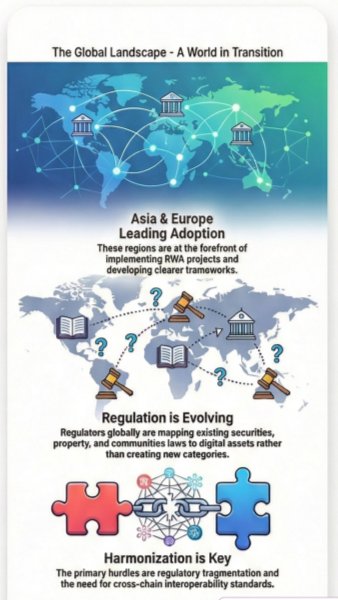
Global adoption of real-world asset tokenization is progressing unevenly, with Asia, Europe, and parts of the Middle East moving quickly through regulatory sandboxes, pilot programs, and digital asset frameworks. Policymakers are working to connect existing securities, banking, property, and fund laws with blockchain-based ownership models. This matters because investors need confidence that a tokenized asset is legally recognized and enforceable across relevant jurisdictions. For issuers, clear rules can reduce uncertainty around compliance, investor eligibility, reporting, and custody requirements. The next major challenge is harmonization, ensuring that tokenized assets can operate across borders without being trapped in isolated platforms or conflicting legal systems.
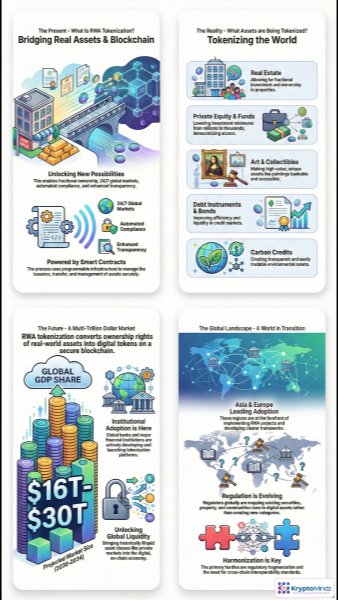
RWA tokenization is best understood as an infrastructure upgrade for traditional finance, not simply a crypto trend. By making ownership more divisible, transparent, and programmable, tokenized assets could change how capital is raised, managed, and transferred. A property owner might raise funds from a broader investor base, a fund manager could automate distributions, and investors may eventually access regulated markets that operate beyond traditional banking hours. However, sustainable growth will depend on credible issuers, strong compliance, secure custody, and standards that connect platforms rather than fragment them. As the technology and regulatory landscape mature, tokenized real-world assets could become a core layer of the next generation of financial markets.
Follow the hub for MiCA, stablecoins, RWA regulation, CASP controls and related training resources.
Related Service RWA & Crypto Compliance StrategyPlan regulated token, stablecoin and RWA programs with governance, risk controls and security reviews.
Implementation Use Case Web3 RWA Compliance OperationsSee how teams can coordinate token workflows, compliance evidence and exceptions across regulated asset operations.
Recommended Course Real-World Assets & TokenizationBuild practical fluency in tokenized assets, settlement models, custody, risk and regulatory operating models.
YouTube Playlist Stablecoin & RWA Regulation BriefingWatch the playlist on CLARITY, GENIUS, STABLE Acts, MiCA comparisons and RWA strategy.
Book a Discovery Call Map This to Your RoadmapDiscuss how this topic applies to your product, compliance posture, architecture or delivery plan.
Editorial trust
Each KryptoMindz article is reviewed against current enterprise AI, blockchain, digital identity and compliance practices before publication or major updates.
Founder-led perspective from KryptoMindz Technologies, focused on secure AI adoption, Web3 risk, digital identity and enterprise trust architecture.
LinkedIn profileResearch, engineering and advisory work across AI Agents, Enterprise Blockchain, Digital Identity and Digital Trust Engineering.
YouTube channelRelated Service
Digital Assets & RWA Consulting
RWA tokenization needs more than a token contract. We design the compliance, custody and governance architecture behind it.
Book a free consultation →Discover more insights and resources on our platform.
Visit Kryptomindz