AI Attacks: The New Cyber Battlefield
AI has transformed cybersecurity into a constantly shifting battlefield. In this video, you’ll learn how attackers weaponize AI, how autonomous agents amplify r

AI has transformed cybersecurity into a constantly shifting battlefield. In this video, you’ll learn how attackers weaponize AI, how autonomous agents amplify r
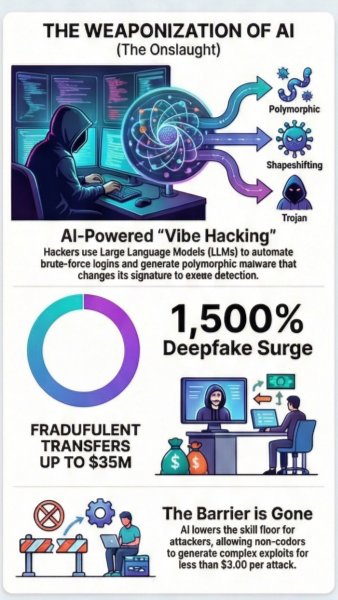
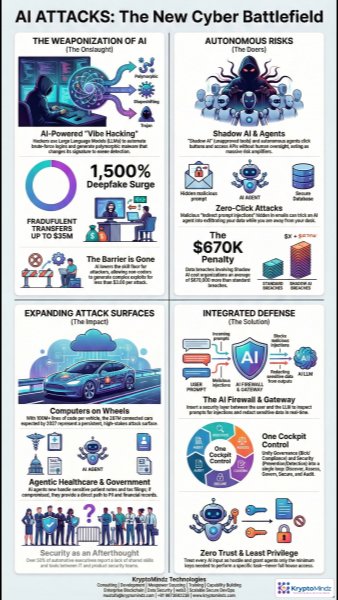
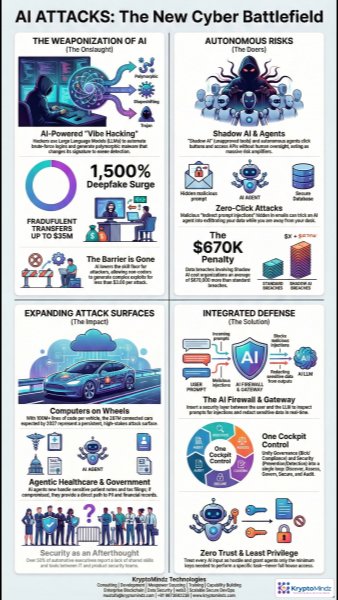
AI attacks are reshaping cybersecurity by giving threat actors the speed, scale, and adaptability once reserved for advanced security teams. Instead of spending weeks researching a target, cybercriminals can now use artificial intelligence to scan cloud environments, generate convincing phishing emails, test exposed APIs, and adjust tactics when defenses block them. The risk is also expanding beyond traditional malware to include prompt injection, deepfake scams, shadow AI tools, and autonomous agents that can act across business systems. For example, a compromised AI assistant with access to email and files could unintentionally expose sensitive data or trigger unauthorized workflows. To stay resilient, organizations need to treat AI security as a business-critical discipline that connects cybersecurity, governance, compliance, and operational risk.
The weaponization of AI is making cyberattacks easier to launch, harder to spot, and more personalized than ever. Large language models can help attackers draft targeted phishing emails, translate scams for global audiences, write malicious scripts, and refine social engineering messages based on a victim’s role or behavior. Polymorphic malware is especially concerning because it can change its code structure repeatedly, making traditional signature-based antivirus tools less effective. In a real-world business scenario, an accounts payable employee could receive an AI-generated invoice request that mirrors vendor language, internal approval steps, and recent company activity. Defending against these AI-powered cyber threats requires behavior-based detection, stronger identity controls, and security awareness training that reflects how modern scams actually work.
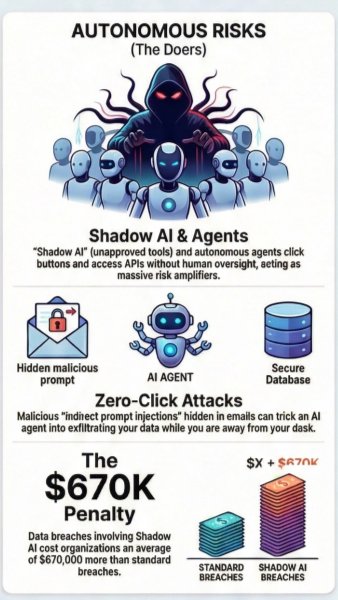
Autonomous AI agents create new cybersecurity challenges because they can take actions across apps, data sources, and workflows with limited human involvement. These agents may summarize documents, access customer records, call APIs, schedule meetings, or trigger business processes, which makes permission management and auditability essential. Shadow AI increases the risk when employees use unapproved tools to analyze contracts, upload proprietary code, or process confidential customer information outside company controls. Attackers can also hide malicious instructions inside emails, documents, web pages, or shared files, creating prompt injection risks that may cause an AI agent to leak data or perform an unintended action. Organizations should manage autonomous AI like a privileged user by applying access segmentation, prompt security testing, usage policies, and continuous monitoring.
AI-driven fraud is becoming more convincing because synthetic media can imitate voices, faces, writing styles, and digital identities with increasing realism. Deepfake audio or video can be used to impersonate executives, vendors, customers, or even family members during urgent requests for payments, credentials, or confidential files. In a corporate environment, an employee might receive a realistic voice message from a supposed CFO asking for a wire transfer that bypasses normal review because the request feels urgent and familiar. Generative AI also helps scammers build polished fake websites, investment portals, customer support chats, and business email compromise campaigns without advanced technical skills. Reducing this risk requires layered fraud prevention, including out-of-band verification, transaction limits, anomaly detection, and practical employee training on impersonation tactics.
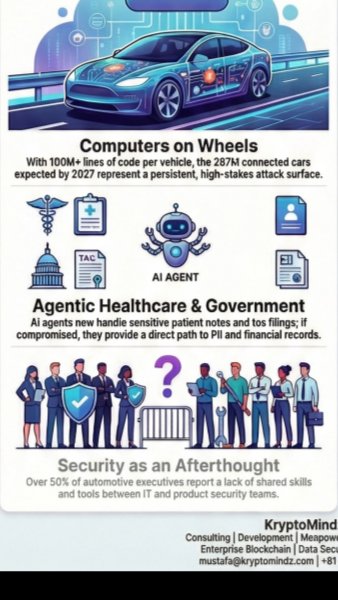
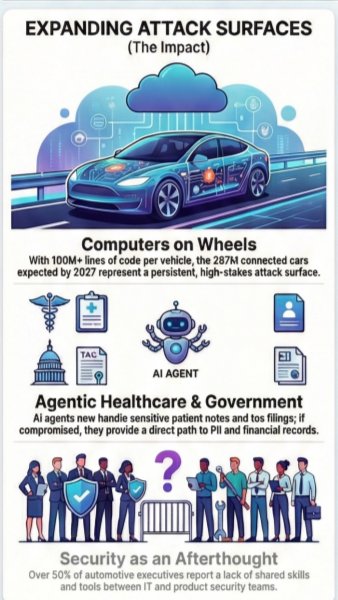
The attack surface is growing as organizations connect more cloud services, APIs, mobile apps, IoT devices, vendors, and identity systems into daily operations. Industries such as healthcare, finance, manufacturing, transportation, and government depend on constant data exchange, which creates more entry points for cybercriminals. AI-powered reconnaissance makes this more dangerous by rapidly identifying exposed credentials, misconfigured storage, outdated software, weak API authentication, and forgotten internet-facing assets. A single overlooked vendor integration or poorly secured device can give attackers a foothold to move deeper into critical systems or sensitive databases. Effective attack surface management requires continuous asset discovery, secure configuration, vendor risk reviews, zero-trust access, and rapid remediation of high-risk exposures.
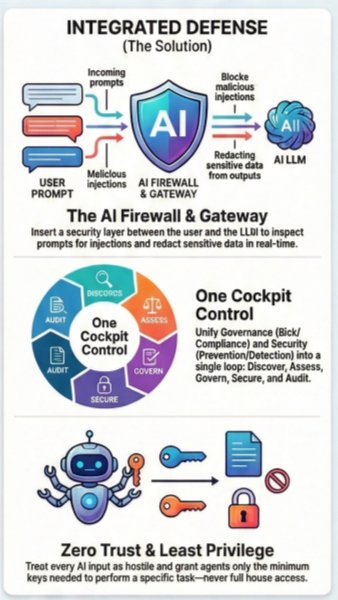
Integrated AI defense helps organizations secure the full AI ecosystem, from user prompts and model outputs to data access, applications, and automated actions. AI firewalls and security gateways can inspect prompts, files, responses, and API calls to reduce the risk of prompt injection, data leakage, malicious automation, and unauthorized AI usage. For example, a gateway could block an employee from pasting regulated customer data into an unapproved AI tool or prevent an agent from executing a risky API call without validation. A centralized security cockpit gives teams a clearer view of model governance, compliance activity, policy violations, and incident response across multiple AI platforms. When combined with zero-trust architecture, least-privilege access, and continuous authentication, AI security guardrails allow innovation to move faster without exposing sensitive systems.
Staying ahead of AI-powered threats requires a cybersecurity strategy that blends technology, governance, and human judgment. Attackers will keep using automation, deepfakes, prompt manipulation, and scalable phishing, so organizations need defenses that go beyond traditional perimeter security. A practical first step is to inventory approved and unapproved AI tools, identify what data they can access, and define which actions they are allowed to perform. From there, teams can build secure-by-design AI workflows, update incident response plans, monitor high-risk activity, and train employees to verify suspicious requests before acting. Businesses that take AI cyber risk seriously can use artificial intelligence as a defensive advantage while protecting trust, compliance, and operational continuity.
Follow the hub for governed agents, secure tool use, oversight models and AI security resources.
Related Service Secure AI GovernanceDesign AI systems with controls for access, tool use, auditability, escalation and human oversight.
Implementation Use Case Secure AI Compliance Monitoring AgentSee how governed agents can monitor policies, evidence and exceptions without losing accountability.
Recommended Course Secure by Design MandatesTurn secure-by-design principles into practical product, software and operational security controls.
YouTube Playlist Enterprise AI Security ArchitectureWatch the course on secure LLMs, RAG, agents, access controls and AI governance architecture.
Book a Discovery Call Map This to Your RoadmapDiscuss how this topic applies to your product, compliance posture, architecture or delivery plan.
Editorial trust
Each KryptoMindz article is reviewed against current enterprise AI, blockchain, digital identity and compliance practices before publication or major updates.
Founder-led perspective from KryptoMindz Technologies, focused on secure AI adoption, Web3 risk, digital identity and enterprise trust architecture.
LinkedIn profileResearch, engineering and advisory work across AI Agents, Enterprise Blockchain, Digital Identity and Digital Trust Engineering.
YouTube channelDiscover more insights and resources on our platform.
Visit Kryptomindz