Secure Your Web3 Ecosystem with Real-Time Invariance Monitoring
Web3 systems move billions of dollars through smart contracts, wallets, and cross‑chain bridges. This video explores how invariance monitoring protects that eco

Web3 systems move billions of dollars through smart contracts, wallets, and cross‑chain bridges. This video explores how invariance monitoring protects that eco
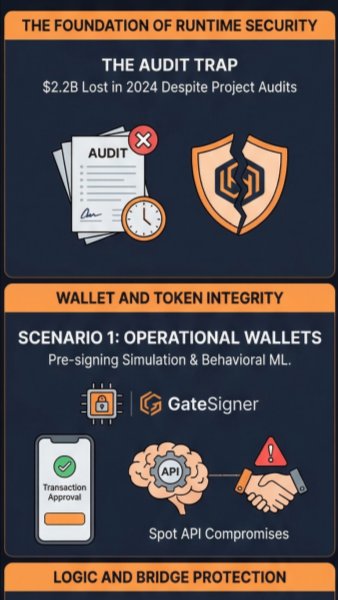
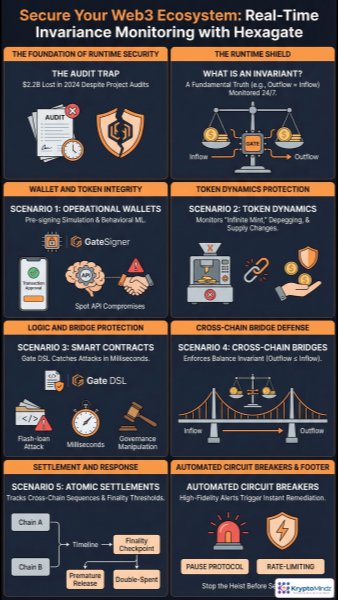
Web3 applications now secure enormous value across smart contracts, DeFi protocols, wallets, and cross-chain bridges, making real-time risk detection a business-critical requirement. Invariance monitoring helps protect these systems by continuously checking whether core financial rules still hold as transactions execute. For example, if a lending pool suddenly allows withdrawals beyond available collateral, the system can flag the issue before it becomes a large-scale exploit. This approach gives teams a live security layer that works alongside audits, simulations, and incident response. In practice, real-time invariance monitoring helps Web3 platforms reduce losses, strengthen user trust, and respond faster to abnormal activity.
Traditional smart contract audits are important, but they cannot account for every condition a protocol will face after launch. Once code is deployed, it may interact with new liquidity pools, upgraded contracts, governance decisions, oracle changes, and volatile market behavior. These runtime conditions can create security gaps that were not present during the original audit window. Continuous monitoring fills this gap by watching live transactions and detecting when system behavior moves outside expected boundaries. For Web3 teams, the strongest defense combines pre-deployment audits with ongoing real-time monitoring and automated response workflows.
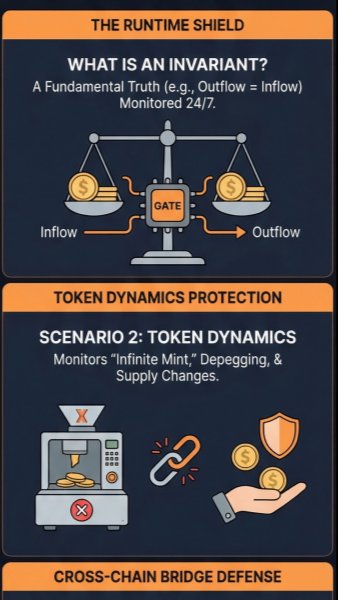
In Web3 security, an invariant is a rule that should remain true regardless of how many transactions, users, or integrations interact with a system. A simple example is that a liquidity pool should never send out more value than it has received plus any legitimate fees or yield. When invariants are monitored around the clock, teams can quickly spot suspicious events such as unexpected balance changes, unauthorized minting, broken collateral ratios, or hidden value leakage. This is especially useful in DeFi, where complex transaction chains can make manual review slow and unreliable. By turning core protocol assumptions into live checks, invariance monitoring makes security more measurable and responsive.
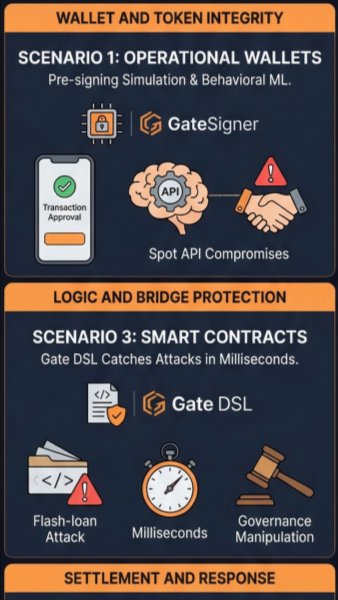
Operational wallets are high-value targets because they often control protocol treasuries, multisig approvals, market-making funds, or exchange reserves. Behavioral intelligence adds a practical layer of protection by learning what normal wallet activity looks like, including signer habits, API usage, transaction timing, and approval patterns. Before a transaction is signed, simulations can estimate its impact and compare it against policy rules or historical behavior. For instance, a treasury wallet attempting an unusually large transfer to a new address outside normal operating hours could be flagged or blocked. This helps teams prevent insider risk, compromised signer activity, and accidental approvals before assets leave the wallet.
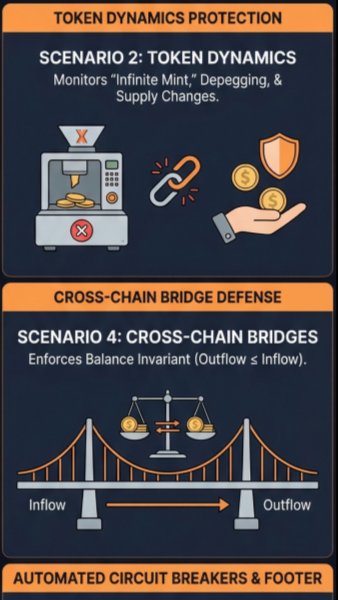
Token dynamics monitoring focuses on whether a token’s supply, liquidity, peg, and collateral behavior remain consistent with the protocol’s design. This is critical for stablecoins, wrapped assets, governance tokens, and yield-bearing assets where small changes can create large market consequences. Invariants can detect issues such as infinite-mint exploits, unauthorized supply cap changes, abnormal redemption activity, or early signs of a stablecoin depeg. For example, if token issuance accelerates without matching collateral inflows, the monitoring system can alert the team immediately. By watching token behavior in real time, Web3 projects can protect market confidence and respond faster to supply integrity risks.
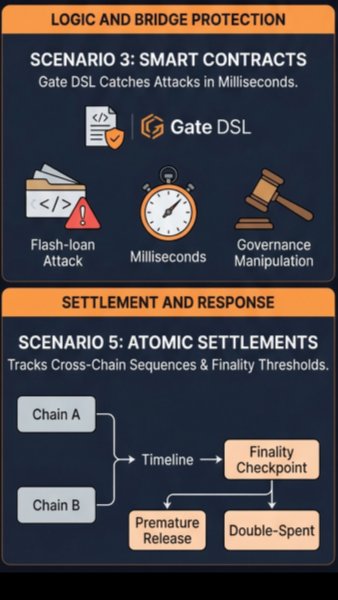
Smart contracts and cross-chain bridges require specialized monitoring because exploits often unfold through fast, complex transaction sequences. Runtime monitors and domain-specific rules can check conditions such as voting power limits, collateral ratios, liquidation boundaries, and transaction execution order within milliseconds. This helps detect threats like flash-loan manipulation, governance attacks, oracle abuse, or unexpected privilege escalation. Cross-chain bridges need similar protection because assets locked on one chain should match assets minted or released on another. By continuously validating inflows, outflows, and message integrity, bridge monitoring can reduce the risk of mint-and-drain, replay, and imbalance attacks.
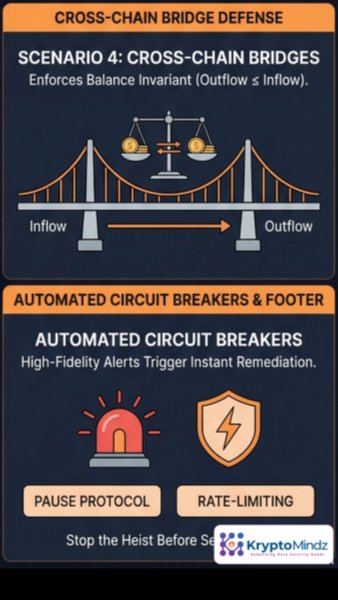
Atomic settlement tracking ensures that multi-step transactions, especially across chains, complete in the correct order and only after the right finality conditions are met. This matters because premature releases, failed confirmations, or duplicated messages can lead to double-spends and unintended asset movement. Invariance monitoring can enforce checkpoints that verify whether each step of a settlement sequence is valid before value is unlocked. When a critical rule fails, automated circuit breakers can pause a protocol, rate-limit activity, or require additional review. This turns monitoring from a passive alerting tool into an active defense mechanism that can stop damage before it spreads.
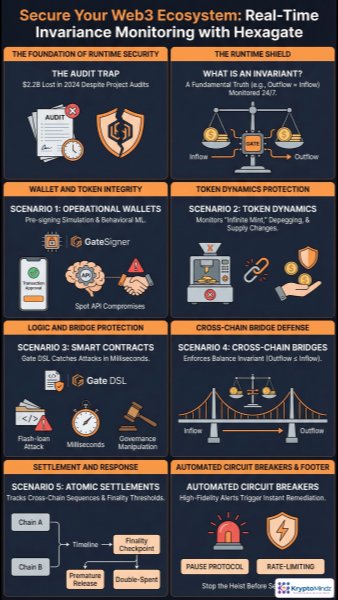
Invariance monitoring brings together wallet security, token integrity, smart contract protection, and cross-chain defense under one continuous security model. Instead of relying only on periodic reviews, Web3 teams can enforce live rules around value flow, access behavior, settlement finality, and protocol health. This creates a stronger operational safety net for DeFi platforms, exchanges, bridges, DAOs, and token issuers. When combined with audits, simulations, governance controls, and incident response plans, real-time monitoring helps reduce catastrophic losses and shorten response times. Ultimately, it gives users, partners, and investors more confidence that a platform can detect and contain threats before they become ecosystem-wide failures.
Follow the hub for governed agents, secure tool use, oversight models and AI security resources.
Related Service Secure AI GovernanceDesign AI systems with controls for access, tool use, auditability, escalation and human oversight.
Implementation Use Case Secure AI Compliance Monitoring AgentSee how governed agents can monitor policies, evidence and exceptions without losing accountability.
Recommended Course Secure by Design MandatesTurn secure-by-design principles into practical product, software and operational security controls.
YouTube Playlist Enterprise AI Security ArchitectureWatch the course on secure LLMs, RAG, agents, access controls and AI governance architecture.
Book a Discovery Call Map This to Your RoadmapDiscuss how this topic applies to your product, compliance posture, architecture or delivery plan.
Editorial trust
Each KryptoMindz article is reviewed against current enterprise AI, blockchain, digital identity and compliance practices before publication or major updates.
Founder-led perspective from KryptoMindz Technologies, focused on secure AI adoption, Web3 risk, digital identity and enterprise trust architecture.
LinkedIn profileResearch, engineering and advisory work across AI Agents, Enterprise Blockchain, Digital Identity and Digital Trust Engineering.
YouTube channelDiscover more insights and resources on our platform.
Visit Kryptomindz