Can You Trust a Digital Signature Online?
Learn how digital signatures, X.509 certificates, and chains of trust actually work so you can sign documents, contracts, and logins online with confidence.

Learn how digital signatures, X.509 certificates, and chains of trust actually work so you can sign documents, contracts, and logins online with confidence.
When you e-sign a document, trust is not created by the image of your signature or the click of a button. It comes from a hidden stack of digital signature technology that verifies identity, protects document integrity, and records proof that the file has not been altered. For example, when a loan agreement, employment contract, or government form is signed online, cryptographic checks help confirm who signed it and whether the content changed afterward. This invisible process is what makes electronic signatures legally defensible and practical for high-value transactions. Without that trust layer, an e-signature would be little more than a digital mark on a page.
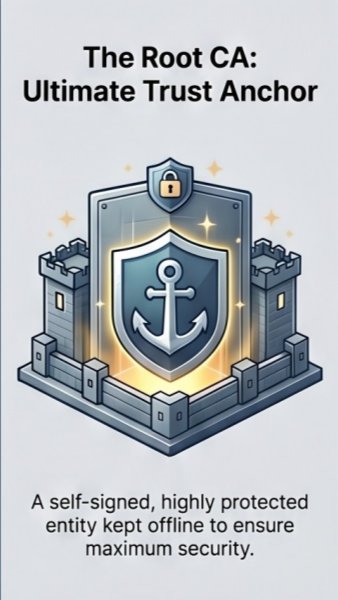
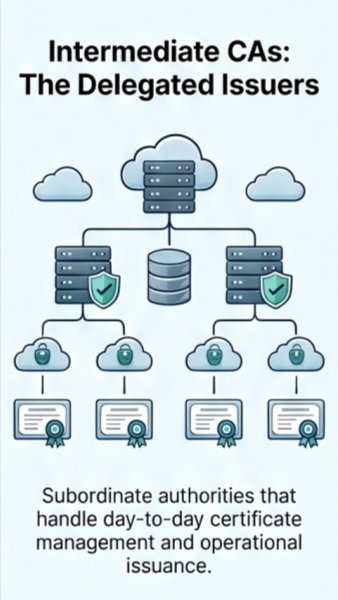
Public Key Infrastructure, or PKI, is the foundation that allows governments and enterprises to trust digital identities at scale. Behind every trusted digital signature is a structured hierarchy of certificate authorities, security policies, public keys, private keys, and validation rules. Banks use PKI to secure online transactions, governments use it for tax portals and digital IDs, and enterprises use it to protect employee access, devices, and sensitive documents. If one layer is mismanaged, such as a compromised certificate authority or expired certificate, the credibility of contracts, licenses, or identity credentials can collapse quickly. That is why PKI is not just an IT tool; it is a trust framework for modern digital services.
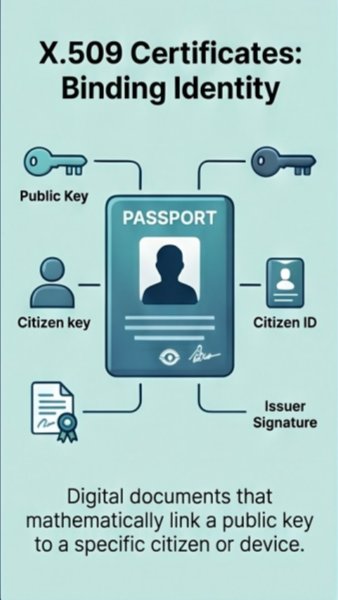
X.509 certificates are the digital credentials that connect a verified identity to a cryptographic public key. In practice, this means a citizen, employee, server, or device can prove that a specific key belongs to them before a digital signature or secure connection is trusted. For example, when a government portal confirms a business registration or an enterprise system validates a signed invoice, X.509 certificates help establish that the right entity is behind the action. These certificates are signed by trusted authorities, creating a chain of evidence that can be checked by software automatically. Their strength lies in making digital identity verifiable, portable, and scalable across complex systems.
Path validation is the process of walking through the certificate chain to decide whether a digital signature should be trusted. Software checks whether the signer’s certificate links back to a trusted root certificate authority, whether each certificate is valid, and whether any certificate has been revoked or expired. In a real-world workflow, this is what helps a court, bank, or government agency determine whether a signed document still carries legal and technical credibility. A signature may look valid on the surface, but path validation reveals whether the trust chain behind it is still intact. This step turns certificate data into a clear trust decision.
Follow the hub for EUDI wallets, verifiable credentials, digital signatures and trust architecture.
Related Service Digital Identity & eIDAS StrategyDesign trusted identity, wallet and credential systems with compliance and interoperability in mind.
Implementation Use Case Government Citizen ServicesExplore how trusted digital services can streamline identity-driven workflows and citizen support.
Recommended Course The Future of Digital IdentityLearn how wallets, verifiable credentials and digital trust frameworks change onboarding and compliance.
YouTube Playlist eIDAS 2.0 EUDI Wallet KYC BootcampWatch the learning path for EUDI wallet onboarding, KYC architecture and trusted digital identity.
Book a Discovery Call Map This to Your RoadmapDiscuss how this topic applies to your product, compliance posture, architecture or delivery plan.
Editorial trust
Each KryptoMindz article is reviewed against current enterprise AI, blockchain, digital identity and compliance practices before publication or major updates.
Founder-led perspective from KryptoMindz Technologies, focused on secure AI adoption, Web3 risk, digital identity and enterprise trust architecture.
LinkedIn profileResearch, engineering and advisory work across AI Agents, Enterprise Blockchain, Digital Identity and Digital Trust Engineering.
YouTube channelDiscover more insights and resources on our platform.
Visit Kryptomindz