EU AI Act Explainer
The EU AI Act is the world’s first comprehensive law tailored specifically for artificial intelligence. This video walks through who must comply, how AI systems
The EU AI Act is the world’s first comprehensive law tailored specifically for artificial intelligence. This video walks through who must comply, how AI systems
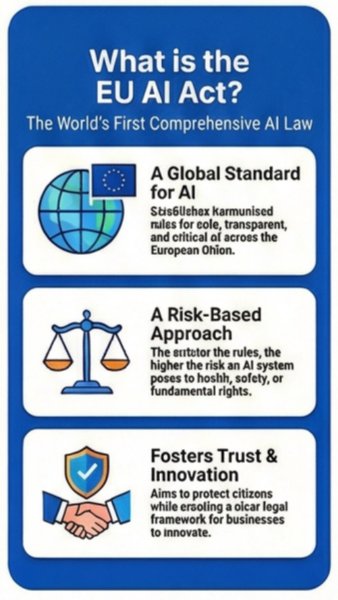
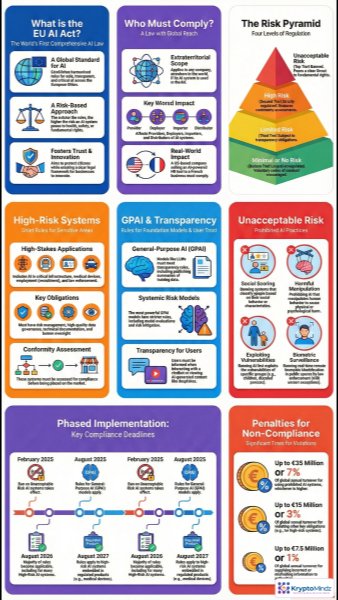
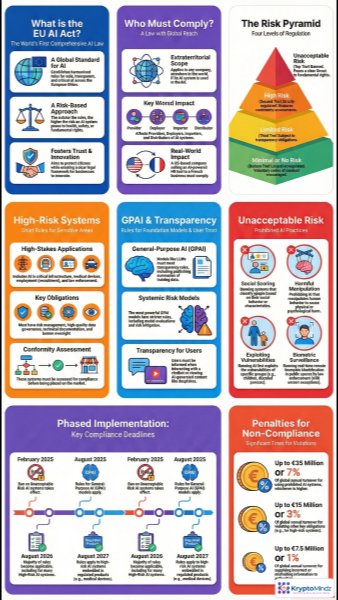
The EU AI Act is the first major legal framework designed specifically to regulate artificial intelligence across the full AI lifecycle. It explains which organizations must comply, how AI systems are classified by risk, and what responsibilities apply to providers, deployers, importers, and distributors. For businesses, this means AI compliance is no longer just a technical issue—it is a governance, legal, and operational priority. The Act also addresses general-purpose AI, high-risk AI applications, transparency duties, and banned practices that could harm people’s rights or safety. Understanding the EU AI Act early helps organizations prepare for audits, reduce regulatory risk, and build more trustworthy AI products.
The purpose of the EU AI Act is to create a trusted environment where artificial intelligence can grow without putting safety, privacy, or fundamental rights at risk. Its core principle is a risk-based model: the more an AI system can affect people’s lives, the more controls it must meet. For example, a recommendation tool on a shopping site is treated very differently from an AI system used in hiring, healthcare, or law enforcement. This approach gives companies clearer rules while encouraging responsible innovation and market confidence. By setting predictable standards, the Act helps organizations design AI systems that are safer, more transparent, and easier to scale across the EU.
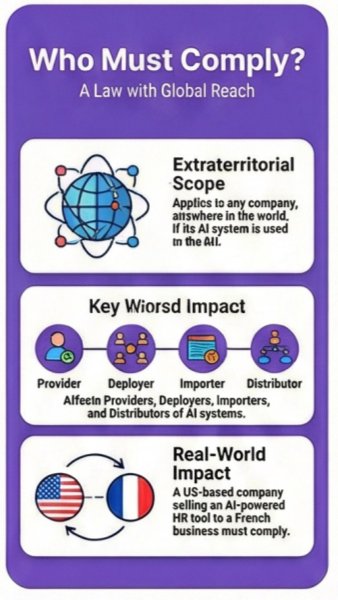
The EU AI Act has global reach because it applies to AI systems that affect people in the European Union, even if the provider is based outside Europe. A U.S., UK, or Asian company may still need to comply if its AI tool is offered in the EU or influences EU residents through hiring, lending, healthcare, education, or customer service. The law also covers multiple roles in the AI value chain, including providers, developers, deployers, importers, and distributors. This means companies must understand not only what their AI does, but also their specific role in bringing it to market or using it in operations. For global businesses, EU AI Act compliance should be built into vendor management, procurement, product launches, and data governance programs.
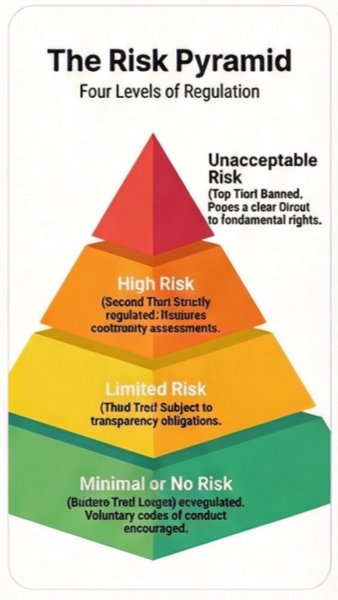
The EU AI Act organizes artificial intelligence systems into a risk pyramid with four main categories: minimal risk, limited risk, high risk, and unacceptable risk. Minimal-risk tools, such as basic spam filters or AI used in video games, generally face light requirements and may follow voluntary best practices. Limited-risk systems, including many chatbots or AI-generated content tools, must provide clear transparency so users know they are interacting with AI. High-risk AI systems, such as tools used in recruitment, medical diagnosis, or critical infrastructure, must meet strict legal and technical obligations. At the highest level, unacceptable-risk AI practices are banned because they pose serious threats to human rights, safety, or democratic values.
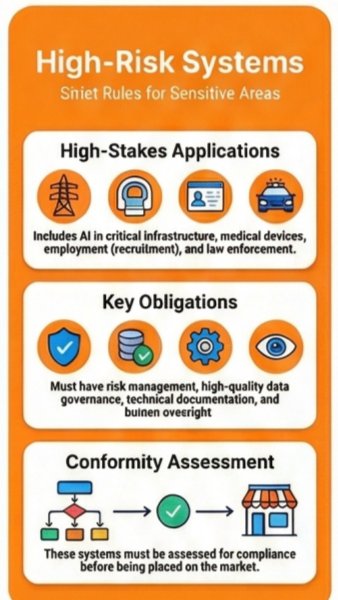
High-risk AI systems are subject to the most detailed obligations because they can directly influence people’s opportunities, safety, or legal rights. Examples include AI used in medical devices, student admissions, employee screening, credit assessments, border control, and law enforcement support. Providers must create a risk management system, maintain strong data governance, prepare technical documentation, keep logs, and ensure meaningful human oversight. Before these systems are placed on the EU market, they may need a conformity assessment to confirm that legal, safety, and quality standards are met. For organizations building or deploying high-risk AI, compliance requires ongoing monitoring—not just a one-time approval before launch.
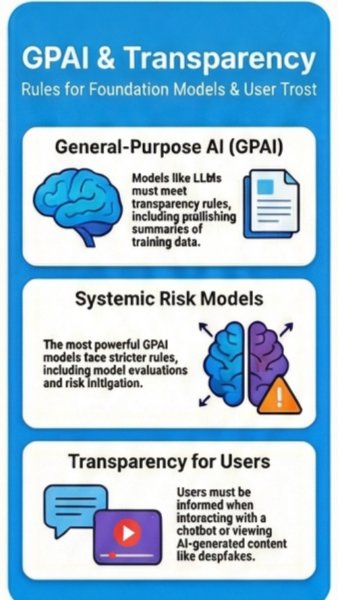
General-purpose AI and foundation models, including large language models, are addressed through transparency, documentation, and safety obligations under the EU AI Act. Providers must share clear information about model capabilities, limitations, intended uses, and potential risks so downstream users can deploy these systems responsibly. More powerful models may face additional duties to assess systemic risks, reduce harmful outputs, and report serious incidents or vulnerabilities. In practice, this affects AI tools used for content generation, coding assistance, customer support, research, and decision support across many industries. Clear disclosure is especially important when users interact with AI or encounter AI-generated text, images, audio, or video.
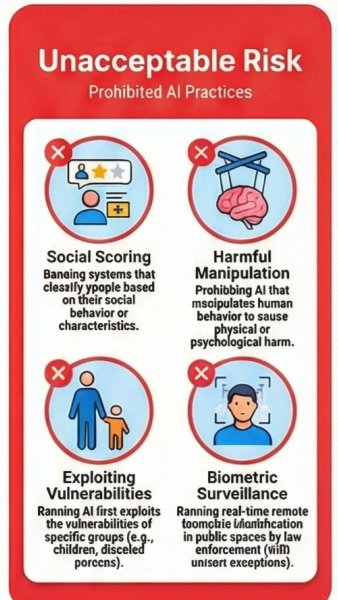
The EU AI Act bans certain artificial intelligence practices because they create unacceptable risks to people’s dignity, autonomy, and fundamental rights. These prohibited AI uses include social scoring that ranks individuals based on behavior or personal traits, manipulative systems that exploit vulnerabilities, and certain forms of biometric identification or surveillance. For example, an AI system designed to pressure vulnerable users into harmful decisions could fall into a prohibited category. The focus is not only on technical performance, but also on whether the AI system could undermine free choice, equality, privacy, or democratic safeguards. Organizations should screen AI projects early to ensure no proposed use case crosses these legal red lines.
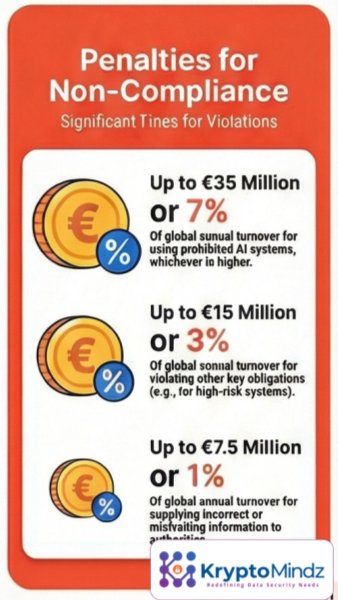
Penalties under the EU AI Act can be significant, with fines based on fixed maximum amounts or a percentage of worldwide annual turnover, whichever is higher. The strictest penalties apply to prohibited AI practices, while other violations may involve failures related to high-risk systems, transparency duties, documentation, or cooperation with regulators. For companies, the financial risk is only part of the concern; enforcement actions can also damage reputation, delay product launches, and weaken customer trust. Regulators may request evidence that an organization understands its AI systems, manages risk, and follows required procedures. Building a compliance program early is often less costly than reacting after an investigation or market restriction.
The EU AI Act sets a new global benchmark for responsible artificial intelligence regulation and is likely to influence AI governance far beyond Europe. Organizations should understand how the Act classifies risk, what obligations apply to high-risk and general-purpose AI systems, and which practices are prohibited. Early preparation can help teams avoid rushed compliance work, reduce legal exposure, and create AI systems that users and regulators can trust. Practical steps include building an AI inventory, assigning ownership, reviewing vendors, improving documentation, and monitoring upcoming enforcement timelines. Companies that treat compliance as part of responsible innovation will be better positioned to compete in a regulated AI market.
Follow the hub for production AI infrastructure, deployment, observability, cost and reliability resources.
Related Service AI Agents & LLMOps DeliveryMove copilots and agents from demos to governed production workflows with monitoring and cost controls.
Implementation Use Case Secure AI Knowledge Operations AgentSee how AI agents can answer, route and govern operational knowledge for teams with traceable controls.
Recommended Course EU AI Act Strategy & LeadershipBuild leadership fluency in AI governance, risk, operating models and practical readiness planning.
YouTube Playlist Production LLMOps ArchitectureWatch the playlist on cutting GenAI costs, latency, failures and production reliability risks.
Book a Discovery Call Map This to Your RoadmapDiscuss how this topic applies to your product, compliance posture, architecture or delivery plan.
Editorial trust
Each KryptoMindz article is reviewed against current enterprise AI, blockchain, digital identity and compliance practices before publication or major updates.
Founder-led perspective from KryptoMindz Technologies, focused on secure AI adoption, Web3 risk, digital identity and enterprise trust architecture.
LinkedIn profileResearch, engineering and advisory work across AI Agents, Enterprise Blockchain, Digital Identity and Digital Trust Engineering.
YouTube channelDiscover more insights and resources on our platform.
Visit Kryptomindz