How to Invest in Real-World Assets (RWAs)
Real-world asset investing brings familiar things like property, bonds, and credit into the digital world. In this video, you’ll learn what tokenized real-world
Real-world asset investing brings familiar things like property, bonds, and credit into the digital world. In this video, you’ll learn what tokenized real-world
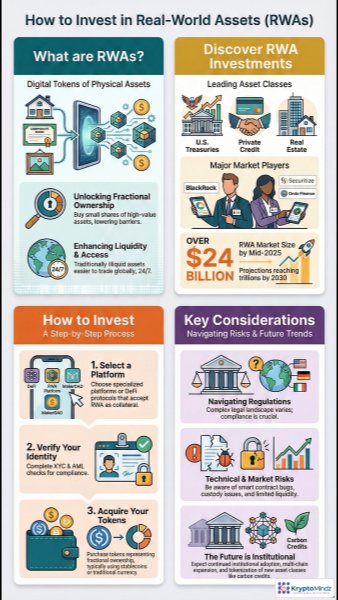
Real-world asset investing is bringing familiar assets such as real estate, bonds, private credit, and invoices into the digital economy through blockchain-based tokens. Instead of only accessing these markets through traditional brokers or large institutions, investors may be able to buy tokenized exposure through regulated platforms or DeFi protocols. This makes the topic especially relevant for anyone interested in portfolio diversification, passive income opportunities, or the future of finance. In this guide, you’ll learn what tokenized real-world assets are, how the investment process works, and which risks deserve close attention before committing capital. The goal is to help you understand the opportunity without overlooking the practical details that matter.
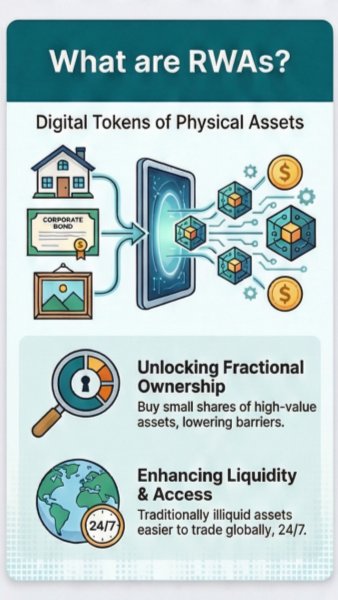
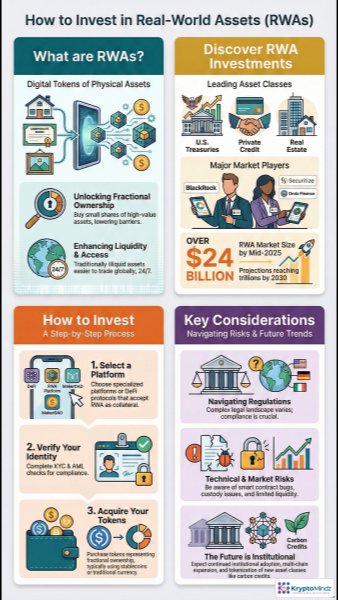
Real-world assets, often called RWAs, are physical or traditional financial assets that are represented digitally as tokens on a blockchain. A tokenized asset might be linked to a rental property, a government bond, a business loan, an invoice, or another income-producing asset. The digital token does not make the asset purely virtual; instead, it is designed to represent a claim, ownership interest, or economic right tied to something that exists off-chain. This structure can make asset management more transparent and efficient, especially when records, transactions, and ownership transfers are handled through blockchain infrastructure. For investors, the key is understanding exactly what the token represents and how the underlying asset is legally secured.
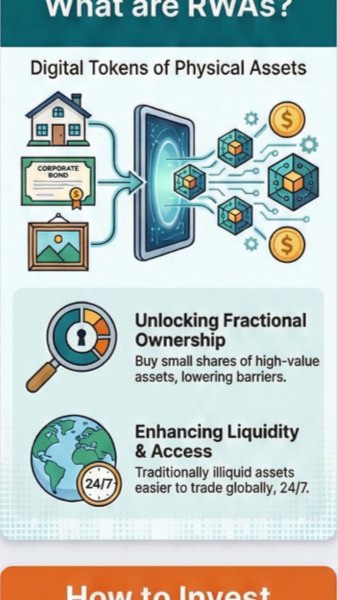
One of the biggest benefits of tokenized real-world assets is fractional ownership, which allows investors to buy smaller portions of expensive assets instead of funding an entire property, loan, or bond position. For example, tokenization could let multiple investors share exposure to a commercial building or a pool of private credit investments. This can lower entry barriers and make diversification more realistic for everyday investors. Tokenization may also improve liquidity by allowing certain traditionally illiquid assets to be traded more frequently on compatible marketplaces. While liquidity is not guaranteed, the potential to access and manage these investments more flexibly is a major reason RWAs are gaining attention.
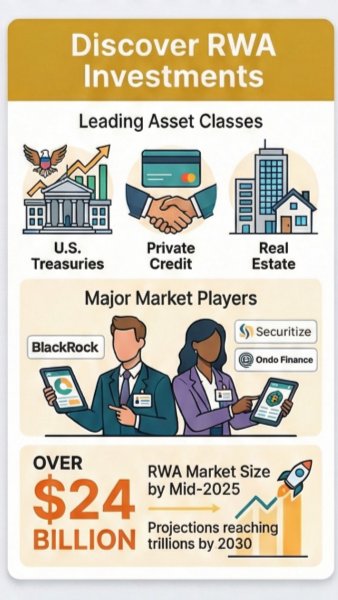
Tokenized real-world assets are gaining traction in sectors where there is strong demand for yield, transparency, and operational efficiency. Government bonds, private credit, real estate, and money market-style products are among the most active early categories. Large financial institutions are exploring tokenization to modernize settlement and distribution, while crypto-native firms are building platforms that connect blockchain users to traditional asset exposure. Although the market is still developing, tokenized RWA activity is already measured in tens of billions of dollars across different asset classes and platforms. Many analysts believe the market could expand significantly as regulation becomes clearer and institutional adoption increases.
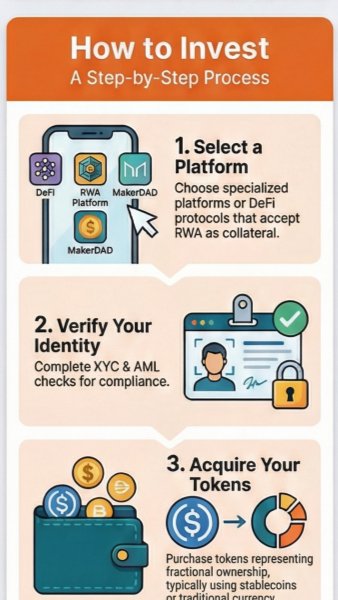
Starting with real-world asset investing usually begins with choosing a reputable platform, marketplace, or DeFi protocol that clearly explains what assets are offered and how investor claims are structured. Look for details about custody, collateral, asset verification, fees, redemption terms, and the parties responsible for managing the underlying investment. Most compliant RWA platforms require identity checks such as KYC and AML procedures before allowing users to invest. After approval, investors may purchase tokens using stablecoins, crypto assets, or traditional currency, depending on the platform. Before buying, it is important to confirm whether the token provides ownership, income rights, debt exposure, or another type of financial claim.
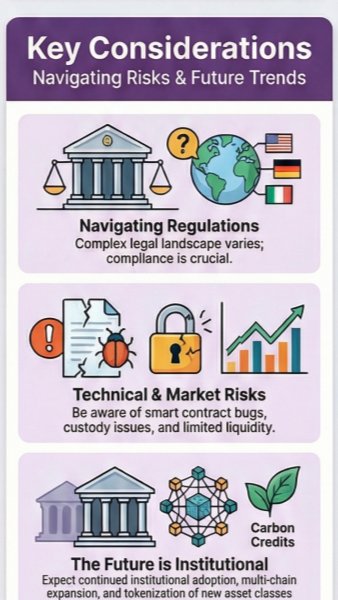
Real-world asset investing comes with risks that differ from both traditional investing and standard crypto trading. Regulations vary widely by country, which means investor protections, tax treatment, and transfer restrictions can change depending on where the asset, platform, and investor are located. Technical risks also matter, including smart contract vulnerabilities, wallet security, oracle failures, and custody issues. Market risks should not be ignored either, as tokenized assets may still face price volatility, default risk, delayed redemptions, or limited liquidity during stressful market conditions. Looking ahead, the sector is likely to see more institutional participation, multi-chain infrastructure, and tokenized asset classes such as carbon credits, commodities, and sustainability-linked investments.
Tokenized real-world assets are creating a bridge between traditional finance and blockchain by turning familiar investments into more programmable, accessible digital instruments. For investors, the appeal lies in potential diversification, fractional ownership, yield opportunities, and improved market efficiency. At the same time, RWAs should be evaluated with the same seriousness as any financial product, including a close review of legal rights, platform credibility, asset quality, and liquidity terms. This market is still early, but it has the potential to reshape how capital is raised, assets are traded, and ownership is distributed globally. A responsible approach starts with education, due diligence, and a clear understanding of how each tokenized asset works.
Follow the hub for MiCA, stablecoins, RWA regulation, CASP controls and related training resources.
Related Service RWA & Crypto Compliance StrategyPlan regulated token, stablecoin and RWA programs with governance, risk controls and security reviews.
Implementation Use Case Web3 RWA Compliance OperationsSee how teams can coordinate token workflows, compliance evidence and exceptions across regulated asset operations.
Recommended Course Real-World Assets & TokenizationBuild practical fluency in tokenized assets, settlement models, custody, risk and regulatory operating models.
YouTube Playlist Stablecoin & RWA Regulation BriefingWatch the playlist on CLARITY, GENIUS, STABLE Acts, MiCA comparisons and RWA strategy.
Book a Discovery Call Map This to Your RoadmapDiscuss how this topic applies to your product, compliance posture, architecture or delivery plan.
Editorial trust
Each KryptoMindz article is reviewed against current enterprise AI, blockchain, digital identity and compliance practices before publication or major updates.
Founder-led perspective from KryptoMindz Technologies, focused on secure AI adoption, Web3 risk, digital identity and enterprise trust architecture.
LinkedIn profileResearch, engineering and advisory work across AI Agents, Enterprise Blockchain, Digital Identity and Digital Trust Engineering.
YouTube channelDiscover more insights and resources on our platform.
Visit Kryptomindz