Securing AI and Quantum with Blockchain
Artificial intelligence and quantum computing are transforming every industry, but they also introduce new kinds of risk. This video explores how blockchain tec

Artificial intelligence and quantum computing are transforming every industry, but they also introduce new kinds of risk. This video explores how blockchain tec
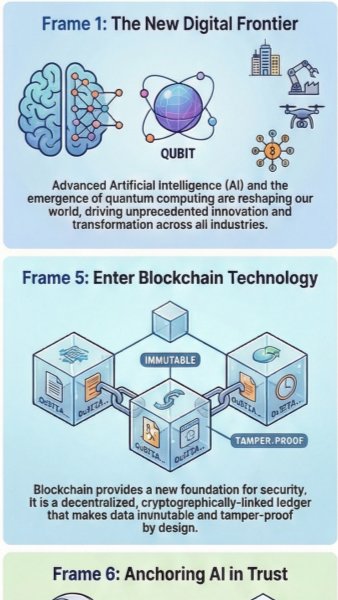
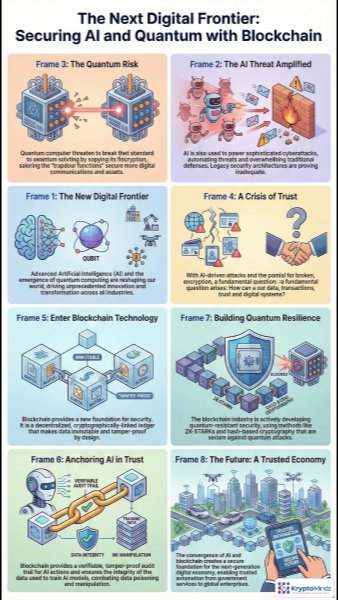
Artificial intelligence and quantum computing are pushing technology into a new digital frontier, changing how businesses analyze data, automate decisions, and protect information. From AI-powered fraud detection in banking to quantum research that could accelerate drug discovery, these innovations offer enormous potential. At the same time, they create new cybersecurity challenges that traditional systems were not designed to handle. This video explores how blockchain technology can strengthen digital trust by securing data records, verifying transactions, and creating transparent audit trails. As AI and quantum breakthroughs reshape the internet, blockchain may become a critical layer for protecting identity, ownership, and accountability.
Advanced AI systems and emerging quantum computers are redefining what organizations can achieve across medicine, finance, logistics, manufacturing, and climate research. AI can scan medical images, predict market behavior, optimize supply chains, and personalize customer experiences at a scale humans could never match alone. Quantum computing adds another layer of possibility by using qubits to process certain complex calculations far faster than classical computers. This could help scientists model new materials, improve route planning, or solve optimization problems that currently take too long to be practical. However, the same speed and intelligence that make these technologies valuable also increase the need for stronger digital security and responsible governance.
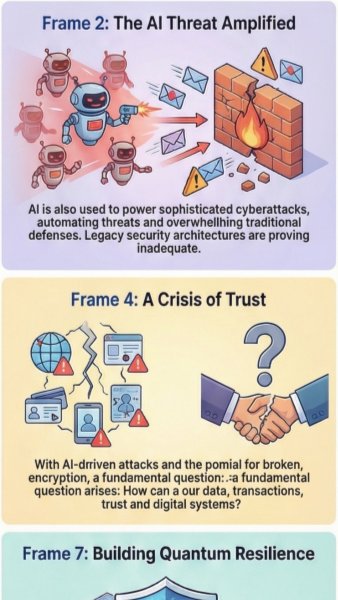
As AI becomes more powerful, cybercriminals can use it to launch faster, more convincing, and more personalized attacks. AI-generated phishing emails can imitate trusted contacts, deepfake audio can impersonate executives, and automated tools can scan networks for vulnerabilities around the clock. Quantum computing introduces a different but equally serious threat because future machines may be capable of breaking widely used encryption methods. If that happens, attackers could decrypt sensitive archives, compromise financial transactions, or forge digital identities that today’s systems treat as secure. These risks make post-quantum security, stronger authentication, and continuous monitoring essential for protecting modern digital infrastructure.
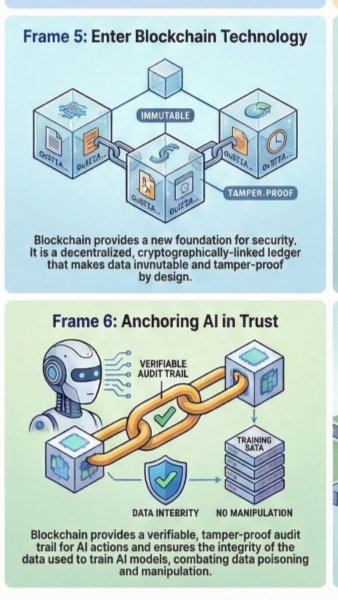
When AI-driven attacks become harder to detect and encryption faces future quantum pressure, digital trust becomes the foundation of every online interaction. Customers need confidence that their bank transfers are legitimate, employees need assurance that remote access requests are authentic, and companies need proof that business records have not been manipulated. Without reliable verification, even routine digital activities can become risky, expensive, and difficult to manage. Blockchain can help address this trust gap by creating shared records that are difficult to alter and easier to audit. Combined with strong identity controls and secure data practices, it can support accountability across increasingly complex digital ecosystems.
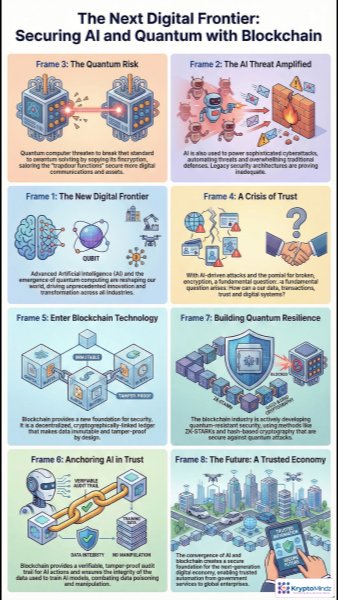
AI and quantum technologies will continue to accelerate innovation, but long-term progress depends on building systems people can trust. Blockchain can play a practical role by preserving data integrity, improving transparency, and supporting secure coordination between organizations. In industries such as healthcare, finance, energy, and government, this could mean protecting patient records, validating supply chain events, or securing high-value digital transactions. As quantum risks grow, blockchain networks will also need to adopt quantum-resilient security methods to remain dependable. By combining responsible AI, post-quantum protection, and blockchain-based verification, societies can create a more secure and trustworthy digital future.
Follow the hub for governed agents, secure tool use, oversight models and AI security resources.
Related Service Secure AI GovernanceDesign AI systems with controls for access, tool use, auditability, escalation and human oversight.
Implementation Use Case Secure AI Compliance Monitoring AgentSee how governed agents can monitor policies, evidence and exceptions without losing accountability.
Recommended Course Secure by Design MandatesTurn secure-by-design principles into practical product, software and operational security controls.
YouTube Playlist Enterprise AI Security ArchitectureWatch the course on secure LLMs, RAG, agents, access controls and AI governance architecture.
Book a Discovery Call Map This to Your RoadmapDiscuss how this topic applies to your product, compliance posture, architecture or delivery plan.
Editorial trust
Each KryptoMindz article is reviewed against current enterprise AI, blockchain, digital identity and compliance practices before publication or major updates.
Founder-led perspective from KryptoMindz Technologies, focused on secure AI adoption, Web3 risk, digital identity and enterprise trust architecture.
LinkedIn profileResearch, engineering and advisory work across AI Agents, Enterprise Blockchain, Digital Identity and Digital Trust Engineering.
YouTube channelDiscover more insights and resources on our platform.
Visit Kryptomindz