Enterprise Blockchain Adoption Explainer
Enterprise blockchain is moving from experiment to core infrastructure. In this video, we’ll explore the market opportunity, why adoption is accelerating now, k

Enterprise blockchain is moving from experiment to core infrastructure. In this video, we’ll explore the market opportunity, why adoption is accelerating now, k
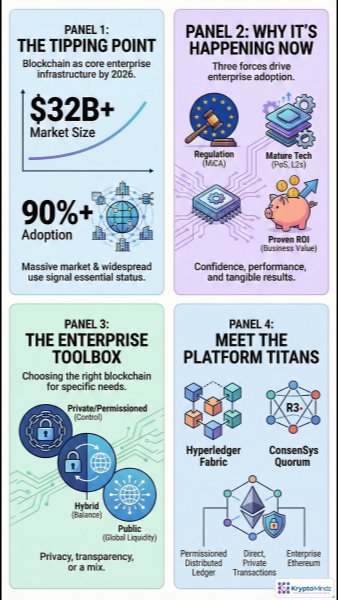
Enterprise blockchain is no longer just an innovation lab experiment; it is becoming a practical foundation for secure, shared digital infrastructure. Businesses are using blockchain technology to coordinate data, assets, and agreements across partners that may not fully trust one another. For example, a manufacturer can track parts across suppliers, logistics providers, and regulators without relying on a single central database. This overview introduces the enterprise blockchain market opportunity, the forces driving adoption, the main deployment models, and the leading platforms shaping implementation decisions. Understanding these fundamentals helps organizations evaluate where blockchain can create measurable business value rather than simply adding technical complexity.
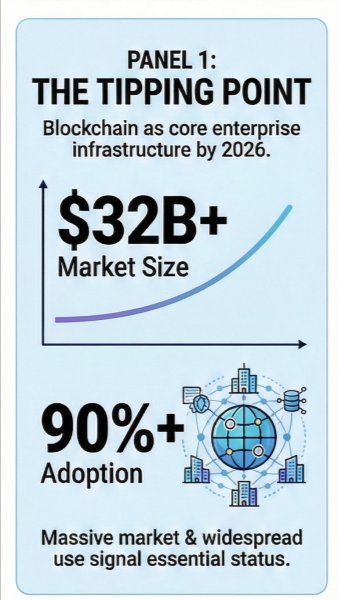
The enterprise blockchain market is expanding quickly as organizations move beyond small pilots and begin deploying production-grade systems. Analysts expect the market to reach tens of billions of dollars in the coming years, driven by demand for secure data exchange, tokenized assets, supply chain transparency, and automated business processes. Large enterprises are adopting blockchain because it can reduce manual reconciliation, improve transaction visibility, and create a shared source of truth across departments or external partners. In industries such as finance, healthcare, logistics, and energy, blockchain is increasingly being evaluated as part of broader digital transformation strategies. This shift signals that enterprise blockchain is becoming less of a speculative technology and more of a strategic infrastructure investment.
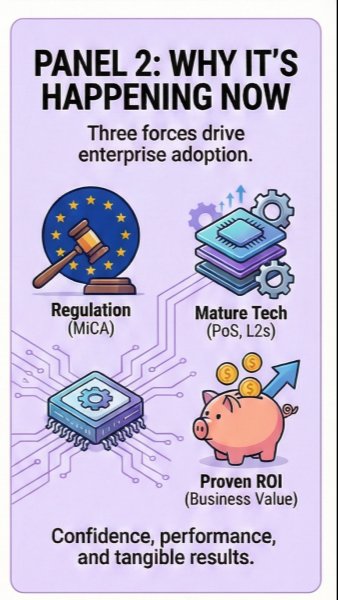
Enterprise blockchain adoption is accelerating because the business and technology environment has become more favorable. Clearer regulation around digital assets, data governance, and compliance gives executives more confidence to invest in blockchain solutions. At the same time, technical improvements such as proof-of-stake consensus, layer-two scaling, and better interoperability have made blockchain networks faster, more efficient, and more cost-effective. Early enterprise deployments are also proving real-world value, including faster settlement, fewer reconciliation errors, and stronger audit trails. Together, these factors make blockchain a more practical choice for organizations that need secure collaboration across complex business networks.
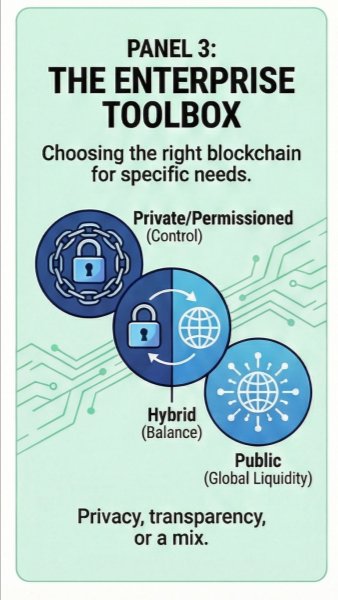
Choosing the right enterprise blockchain model depends on how much control, transparency, privacy, and network reach an organization needs. Private or permissioned blockchains are often preferred when companies need strict access control, defined governance, and confidential transaction data, such as in banking or healthcare. Public blockchains provide open participation, broad liquidity, and strong network effects, making them useful for tokenized assets, decentralized finance integrations, or customer-facing digital products. Hybrid blockchain models combine both approaches by keeping sensitive business logic private while using public networks for verification, interoperability, or settlement. The best model is usually determined by the use case, regulatory requirements, partner ecosystem, and long-term scalability goals.
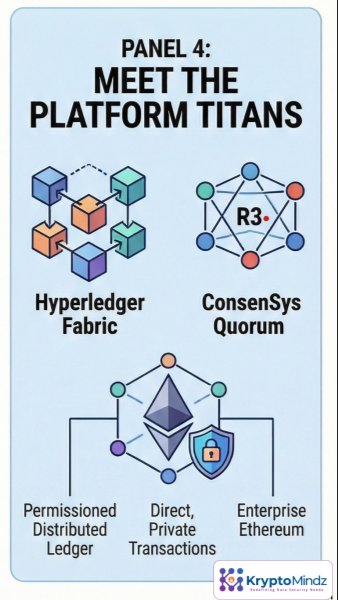
Several enterprise blockchain platforms have emerged to support different business needs, governance models, and industry requirements. Hyperledger Fabric is widely used for permissioned distributed ledger networks, especially where consortium members need controlled access and customizable rules. ConsenSys Quorum and enterprise Ethereum-based solutions appeal to organizations that want private transactions while remaining compatible with Ethereum tools, smart contracts, and developer ecosystems. Industry-focused blockchain vendors also support specialized networks for financial services, global trade, insurance, and supply chain collaboration. When selecting a platform, enterprises should consider performance, privacy features, integration options, developer support, governance, and long-term ecosystem strength.
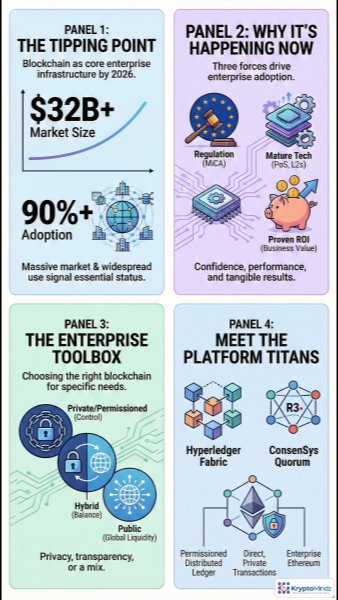
Enterprise blockchain is entering a more mature phase as market demand, regulatory progress, and technical improvements converge. For organizations managing multi-party processes, blockchain can improve trust, reduce operational friction, and automate agreements through smart contracts. A logistics company, for instance, can use blockchain to verify shipments, trigger payments, and maintain tamper-resistant records across carriers, customs agencies, and customers. However, success depends on choosing the right use case, deployment model, platform, and governance structure rather than adopting blockchain for its own sake. When implemented strategically, enterprise blockchain can extend the capabilities of traditional databases and enable new forms of secure digital collaboration.
Follow the hub for smart contract, DeFi, blockchain infrastructure and Web3 security resources.
Related Service Blockchain Trust & Web3 SecuritySecure smart contracts, token workflows, integrations and decentralized infrastructure before launch.
Implementation Use Case Secure AI DeFi Risk AgentExplore how monitored agents can support DeFi risk review, anomaly triage and governance operations.
Recommended Course Verifiable Trust After AI & QuantumLearn how blockchain, credentials and cryptographic trust models support resilient digital systems.
YouTube Playlist AI Agents + Blockchain CourseWatch the course on secure Web3 agents, wallets, DeFi workflows and smart contract integrations.
Book a Discovery Call Map This to Your RoadmapDiscuss how this topic applies to your product, compliance posture, architecture or delivery plan.
Editorial trust
Each KryptoMindz article is reviewed against current enterprise AI, blockchain, digital identity and compliance practices before publication or major updates.
Founder-led perspective from KryptoMindz Technologies, focused on secure AI adoption, Web3 risk, digital identity and enterprise trust architecture.
LinkedIn profileResearch, engineering and advisory work across AI Agents, Enterprise Blockchain, Digital Identity and Digital Trust Engineering.
YouTube channelDiscover more insights and resources on our platform.
Visit Kryptomindz